

We’re upgrading our hospital and working to keep disruption to a minimum. Learn more.

What is Sports & Exercise Medicine?
Getting an accurate diagnosis is often the most important first step. Understanding exactly what is wrong, arranging the right imaging, and having a clear management plan in place is what allows recovery to move forward properly rather than stalling in a cycle of rest and uncertainty.
Sports and Exercise Medicine is for anyone dealing with a musculoskeletal injury who wants to stay active and return to full function.
You hurt your knee playing football a couple of months ago. Your GP told you to rest it. Your physiotherapist has been working on it for weeks. It’s better, but not right. You’re still not back to playing, and nobody seems to have a completely clear answer about what is actually wrong, or when you should expect to be back.
Or perhaps it’s your Achilles. Or your shoulder. Or a hip that has been sore and clicking away since you started running more seriously. The pattern is familiar: an injury that doesn’t quite resolve, a succession of appointments that haven’t produced a definitive plan and a growing frustration that you’re not getting back to the activity you love.
If that sounds familiar, there is a pathway most people don’t know exists. It’s called Sports and Exercise Medicine (SEM), and it may well be the missing piece in your recovery.
Getting Back to Sport: The Specialist Pathway
Sports and Exercise Medicine is a recognised medical speciality, overseen in the UK by the Faculty of Sport and Exercise Medicine (FSEM). SEM Consultants are qualified doctors who have undergone specialist postgraduate training specifically in musculoskeletal conditions, sports injuries, and exercise-related health.
The aim of Sports & Exercise Medicine is to accurately diagnose the problem and build a plan that gets you back to full activity by looking at the full biomechanics of the body and your specific injury, and without defaulting to surgery unless genuinely necessary.
In practical terms, this means a SEM Consultant can:
- Request and interpret diagnostic imaging — X-rays, MRI, and ultrasound
- Perform diagnostic ultrasound scans and administer therapeutic injections
- Design personalised rehabilitation programmes tailored to your sport and goals
- Manage return-to-sport planning after injury or surgery
- Coordinate care across physiotherapy, orthopaedic surgery, and other specialties
- Help to treat multi-site joint pain, or soft tissue injuries that are impacting your function
SEM works alongside orthopaedic surgery and physiotherapy. It is not a replacement for either. It is, for many patients, the first step towards getting and back to training or exercise.
What Conditions Does Sports & Exercise Medicine Treat?
The breadth of SEM often surprises people. It covers far more than the acute injuries you might associate with professional sport.

Muscle and Tendon Injuries
Tears, strains, and tendinopathy, including Achilles tendon problems, patellar tendinopathy, and rotator cuff issues. Often the result of overload, a sudden change in training, or a mismatch between what the body is being asked to do and what it has been conditioned for.

Stress Fractures
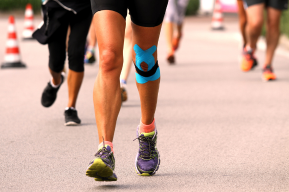
Common in runners and athletes who increase their mileage or intensity too quickly. Frequently missed or dismissed as ‘just shin pain’. Stress fractures require accurate diagnosis and a carefully managed return to activity.

Exercise-Related Joint Pain
Knee pain in cyclists, hip pain in runners, shoulder pain in swimmers, exertional rhabdomyolysis in endurance athletes. Exercise-related joint problems that don’t always have a clear structural cause on imaging, but are nonetheless real, limiting, and treatable.

Overuse Injuries
IT band syndrome, runner’s knee, tennis elbow, golfer’s elbow, all repetitive strain patterns that benefit significantly from management, technique review and targeted rehabilitation.
Return to Sport After Surgery
Patients who have had orthopaedic surgery and want specialist-level guidance on returning to training safely and progressively.
Exercise Prescription for Chronic Conditions
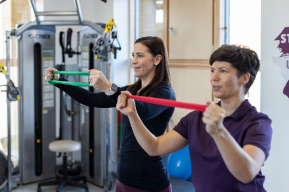
For patients managing diabetes, cardiovascular disease, obesity, or mental health conditions where exercise is part of the clinical plan but needs to be structured safely and progressively.


Which Speciality Do I Actually Need?
This is the question we hear most often when it comes to Sports and Exercise Medicine, physiotherapy and orthopaedic surgery, and it is entirely understandable. The distinctions between different types of clinical care are not always obvious from the outside. Here is a straightforward guide.
Physiotherapist
What they do
Exercise therapy, manual therapy, rehabilitation programmes, movement assessment and correction.
When to see them
You have a working diagnosis and need structured rehabilitation to recover and prevent recurrence.
Sports & Exercise Medicine Consultant
What they do
Diagnosis, imaging review, injection therapy, return-to-sport planning, non-surgical management, coordination of care.
When to see them
You have an injury without a clear diagnosis. If you’ve already seen a physiotherapist, the treatment plan isn’t helping resolve the issue. You want specialist input without going straight to surgery.
Orthopaedic Surgeon
What they do
Surgical assessment and treatment of structural injuries e.g. ligament reconstruction, joint replacement, tendon repair, fracture fixation.
When to see them
Conservative management has not resolved the problem, or you have a structural injury that requires surgical repair, such as an ACL rupture or a significant tendon tear.
It is also worth knowing that these three pathways sit together in our connected care pathway for MSK injuries at One Stop Healthcare – Hemel Hempstead. If you see our SEM consultant and it becomes clear that surgery is the right course of action, the referral pathway to our orthopaedic specialists is direct and quick. All your scans, clinical history and notes come with you. You are not starting again from the beginning.
What Happens at a First Appointment?
Sports and Exercise Medicine is not reserved for professional footballers or Olympic athletes. The majority of patients seen in a SEM clinic are everyday active people; club runners, recreational tennis players, gym-goers, weekend cyclists, and individuals who have simply increased their activity levels and picked up an injury in the process.
An initial Sports & Exercise consultation at One Stop Hospital is a thorough, focused appointment.
Your consultant will take a detailed history: when the injury happened, what makes it better or worse, what treatment you have already had, and importantly what your activity goals are. Whether you want to run a half marathon, return to five-a-side football, or simply be able to walk without pain, that goal shapes the entire management plan.
You will then have a functional movement and physical assessment, an evaluation of how you move, load, and compensate around the affected area, not just a brief examination of the injury site.
If imaging is indicated, it can be arranged quickly at One Stop Healthcare. If you have previous scans, these will be reviewed as part of the appointment. The consultation usually ends with a diagnosis, management plan and clear next steps.
Book A Consultation at One Stop Healthcare
Most patients who come to a SEM consultation tell us they wish they had come sooner.
If you have been managing an injury that is not improving, book an appointment and get back on track to activity. You can self-refer and book directly without a GP referral, or come via your GP or physiotherapist if you prefer. If you are using private medical insurance, please check with your provider as a referral letter is likely to be required.
Alternatively, if you have a question, contact our knowledgeable Enquiries Team who will be happy to help.
Medically reviewed by Dr Irfan Ahmed - Consultant in Musculoskeletal, Sport & Exercise Medicine on 08.07.2026