


We’re upgrading our hospital and working to keep disruption to a minimum. Learn more.
The Essential Guide to Gallstones and Keyhole Surgery
Gallstones are small, hardened deposits that form in the gallbladder, a small organ located under your liver that stores bile, secreting it when you eat fatty foods. Many people have gallstones without ever knowing, but when symptoms appear, they can cause severe pain, vomiting, infection and sometimes jaundice. If you experience persistent pain in the upper abdomen, fever or yellowing of the skin or eyes, it is important to seek medical advice promptly.
“When I tell patients what a gallbladder is, I compare it to a bottle of washing-up liquid. It contains green stuff, and when you’ve got grease on your plates you squirt some green stuff, washing-up liquid, on to your plates to dissolve the grease. Similarly, when you eat fatty foods, your gallbladder contains this green stuff, bile. It squirts green stuff, bile, into your gut to help break down fats.”
– Mr. Aruna Munasinghe
What are the Symptoms?
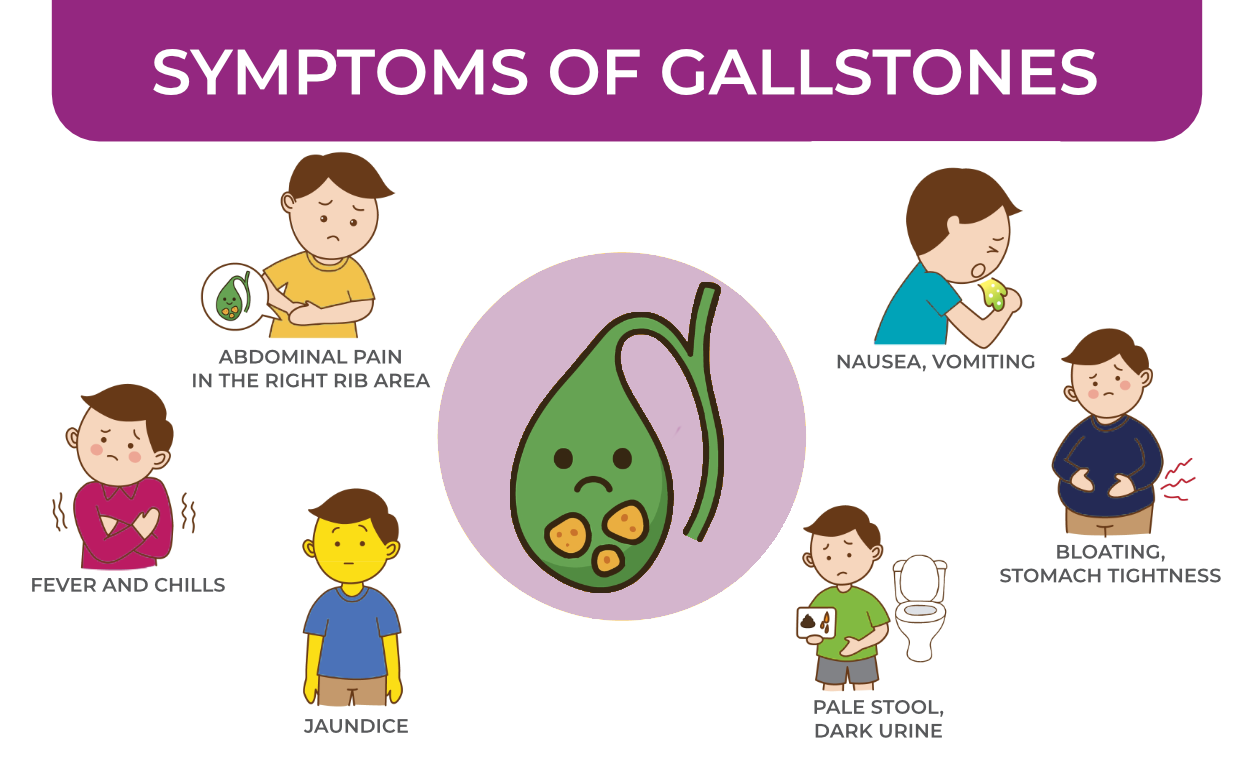
Gallstones often cause no symptoms at all, but when they do, they typically cause sudden, severe pain in the upper right part of the abdomen or just below the breastbone. This pain can last for several hours and may radiate to the back or right shoulder. Other symptoms include nausea, vomiting and digestive discomfort, especially after eating fatty meals.
If gallstones block the bile ducts, they can lead to serious complications such as infection, inflammation of the gallbladder (cholecystitis) or jaundice. Less commonly, untreated gallstones can cause pancreatitis, which is a potentially life-threatening condition.
This is why the NICE (National Institute for Health and Care Excellence) guidelines recommend removal of the gallbladder as soon as is practicable for anyone with symptomatic gallbladder stones, with a further recommendation that this is carried out through keyhole surgery in a day-case setting where appropriate.
If gallstones have moved into the bile duct, then ERCP (endoscopic retrograde cholangiopancreatography) may also be recommended.
Who Is at Risk of Developing Gallstones?
Gallstones can affect anyone,
but some people are more likely to develop them than others.
You are at higher risk if you’re:
Female – Women are more prone to gallstones because oestrogen increases cholesterol levels in bile and can slow gallbladder emptying. Pregnancy, hormone therapy and birth control pills all raise oestrogen levels, which adds to the risk.
Age over 40 – As we age the balance of bile components changes, and the gallbladder may not empty as efficiently, making stone formation more likely.
Overweight or obese – Excess body weight can increase cholesterol in bile, which is one of the main contributors to gallstone formation.
Experiencing rapid weight loss – Losing weight too quickly can cause the liver to release extra cholesterol into bile, which can lead to gallstones.
High-fat, low-fibre diet – Diets rich in fat and low in fibre can alter bile composition and slow digestion, increasing the risk of stones.
Medical conditions – Conditions like diabetes, liver disease and certain blood disorders can affect bile chemistry or gallbladder function, making stones more likely.
Family history – Genetics play a role; if gallstones run in your family, you may inherit a tendency to develop them.
How Are Gallstones Diagnosed?
Gallstones are often discovered by chance during scans for other health issues, as many people have no symptoms. If you do have symptoms, ultrasound scans are the most common and reliable way to detect gallstones. You may also have blood tests to check liver function and look for signs of infection or blockage. In some cases, further imaging such as a specialised MRI scan (MRCP) or an endoscopic procedure may be needed if stones are suspected in the bile ducts.
Treatment: Laparoscopic Cholecystectomy (Lap Chole)
Before Surgery
When surgery is needed, the preferred option is laparoscopic gallbladder removal, referring to a minimally invasive approach, commonly known as keyhole surgery. More than 98% of cases can be remedied with minimally invasive surgery.
Before the operation, you will have a pre-operative assessment and advised about fasting and if you need to stop taking any medications. The procedure is carried out under general anaesthesia, so you will be asleep throughout.
During Surgery
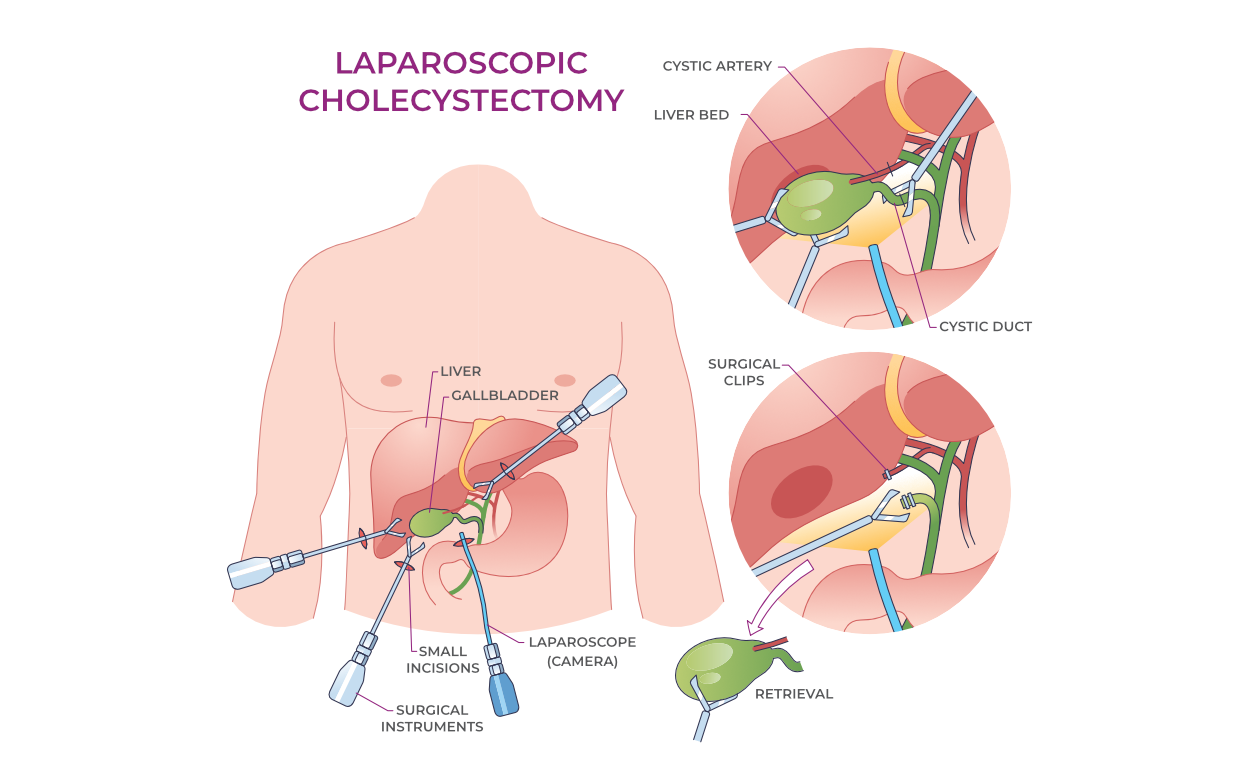
During the procedure, the surgeon makes four small incisions in the abdomen. Through these openings, a tiny camera and specialised instruments are inserted to remove the gallbladder. Because the incisions are small, patients typically experience less pain, smaller scars and a much faster recovery compared to traditional open surgery.
The surgery typically takes between one and two hours.
 Click to enlarge graphic
After Surgery: Day-Case Recovery
You’ll usually be up and about within a few hours and fully mobile before going home the same day. It’s common to feel like you’ve been ‘kicked’ in the upper abdomen and you might experience some shoulder discomfort due to the gas used to inflate the abdomen during surgery.
Plan for up to two weeks off work to allow for full recovery, although light activities can resume sooner.
How Quickly Can You Get Back to Normal?
You can eat and drink normally once you feel ready and there’s no need to maintain a low-fat diet.
Most people can shower the following day and are able to return to work within two weeks, but this depends on the type of job you do. If your work involves heavy lifting, you may need a little longer.
You can usually start driving again when you feel comfortable performing an emergency stop without pain.
A follow-up appointment is typically scheduled around six weeks after surgery.
Possible Side Effects and Risks
The body usually adapts well to living without a gallbladder, allowing you to maintain your usual lifestyle. Some patients may notice temporary digestive changes, such as looser stools, while the body adjusts. These effects are generally mild and short-lived, but can be medically treated if persistent.
Serious complications are extremely rare but can include infection, bleeding or injury surrounding structures. The most significant risk is damage to the common bile duct, where risk is quoted at 0.3-0.6%.
The One Stop Difference
Laparoscopic gallbladder removal is a safe and effective treatment for problematic gallstones. Patients recover quickly and return to normal life within two weeks.
At One Stop Healthcare, we specialise in day-case laparoscopic cholecystectomy, performed by expert consultant general surgeons. Our streamlined approach means minimal waiting times, quicker diagnosis, advanced keyhole techniques and a smooth recovery, so you can get back to living your life without discomfort.
Book your consultation today and take the first step toward fast, safe and effective gallbladder surgery with trusted specialists.
Book a Consultation
Alternatively, if you have a question, contact our knowledgeable Enquiries Team who will be happy to help.
Contact Us
Medically reviewed by Mr Aruna Munasinghe - Consultant Laparoscopic Upper GI, Bariatric and General Surgeon on 13.12.2025