


We’re upgrading our hospital and working to keep disruption to a minimum. Learn more.

Why PCOS has been renamed PMOS, and what changes for you
Polycystic ovary syndrome (PCOS) has a new name. It is now called polyendocrine metabolic ovarian syndrome, or PMOS.
We explore what that means for you, whether you’ve already been diagnosed or are looking for answers about your symptoms.
The new name is the result of 14 years of work. More than 14,000 patients and health professionals contributed, alongside 56 patient and professional organisations from around the world. In the UK, the patient charity Verity helped lead the process.
PMOS stands for:
Polyendocrine: it affects several of your hormones, not just one
Metabolic: it affects how your body uses energy, including how it responds to insulin
Ovarian: it affects how your ovaries work and how often you ovulate
Syndrome: it is a group of symptoms that can vary from person to person
Why was PCOS renamed PMOS?
The old name focused on just one organ, suggesting the condition was all about cysts on the ovaries. In reality, the condition can affect your weight, metabolism, mental health, skin and fertility. Experts believe the focus on ovaries contributed to missed diagnoses, delays and treatment that didn’t cover the whole picture.
The new name aims to change that. It recognises PMOS as a long-term hormonal and metabolic condition that needs care for your whole body.
“The name polycystic ovary syndrome dates back to 1935, when the condition was first described based on what doctors could see in the ovaries. More than 90 years later, we know it’s so much more than that. The women I see are often far more concerned about their periods, weight, skin or how they’re feeling day to day than about their ovaries. The new name finally reflects what patients have been telling us for years.”

What does the name change mean for you?
If you’ve been diagnosed with PCOS, you have PMOS. It is the same condition with a more accurate name, so your existing diagnosis still stands and you don’t need any new tests.
The name change on its own won’t change your treatment. If your current care is working for you, carry on as you are. Over time, the new name may encourage doctors to look more closely at your endocrine and metabolic highlights and how the condition affects multiple hormone systems, energy processing, and insulin resistance, as well as your periods and fertility.
You’re likely to see both names for a while. The change is being phased in over the next few years, so your medical records, leaflets and older websites may still say PCOS. Both names refer to the same condition.
When will the change happen in the UK?
UK health bodies began moving to the new name straight away. NICE (National Institute for Health and Care Excellence) adopted PMOS immediately after the announcement in May 2026 and used it in its draft guidance in July. The Royal College of Obstetricians and Gynaecologists (RCOG) said in May that it would update its guidance to reflect the change. NHS England updated the NHS website by the end of June 2026 and has committed to using the new name across all of its care pathways and patient information, though it hasn’t set a date for this to be complete.
Worldwide, the change is being phased in over three years. A formal three-year transition period is underway, during which both terms (“PMOS” and “PMOS, formerly PCOS”) will be used across GP letters, NHS web pages, prescriptions and patient records. The new name is due to be fully adopted in the next international guideline update, expected in 2028. Until then, you may see PCOS and PMOS used side by side.
What is PMOS?
Polyendocrine metabolic ovarian syndrome (PMOS) is a common, long-term condition that affects your hormones and metabolism. It was previously called polycystic ovary syndrome (PCOS). You may also see it written as polyendocrine metabolic ovary syndrome.
PMOS affects around 1 in 8 women. It’s usually diagnosed during the reproductive years, but it’s a lifelong condition. In the UK, that’s an estimated three to four million women, and many of them don’t know they have it.
The exact cause isn’t known, but PMOS often runs in families. It is linked to higher levels of hormones called androgens, such as testosterone, and to your body not responding to insulin as well as it should.
Not sure whether PMOS affects you?
Many people live with it for years without knowing. Here’s what it is and what to look out for.
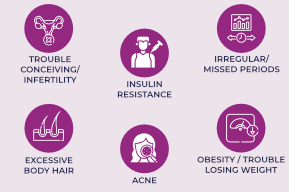
Symptoms
Symptoms usually start around puberty, but you might not notice them until later. They vary from person to person, and many are common to other conditions too.
Symptoms of PMOS can include:
- irregular periods, or no periods at all
- excess hair on your face, chest or back (hirsutism)
- acne or oily skin
- thinning hair or hair loss from your head
- weight gain, or finding it hard to lose weight
- difficulty getting pregnant
- low mood or anxiety
You don’t need to have all of these to have PMOS. If several sound familiar, it’s worth speaking to a GP or a specialist.

Diagnosis
There’s no single test for PMOS. A doctor will usually diagnose it if you have at least two of these three features:
- Irregular or infrequent periods, which suggest you’re not ovulating regularly
- Signs of higher androgen levels, either from symptoms such as excess hair or acne, or from a blood test
- Many small follicles on your ovaries, seen on an ultrasound scan
To reach a diagnosis, your doctor may:
- ask about your periods, symptoms and family history
- arrange blood tests to check your hormone levels
- arrange a pelvic ultrasound scan
- rule out other conditions that can cause similar symptoms, such as thyroid problems

Treatments
There are several ways to effectively manage the symptoms of PMOS.
Depending on your symptoms and goals, options may include:
- Lifestyle support: guidance on diet, activity and sleep, which can help with your weight, insulin response and periods
- Medicines for your periods: to help regulate your cycle and protect the lining of your womb
- Medicines for hair growth and acne: to reduce the effects of higher androgen levels
- Medicines for metabolic health: such as metformin, which can help your body respond to insulin
- Fertility support: if you’re trying to get pregnant, there are treatments to help you ovulate
- Emotional support: help with low mood, anxiety or body image
Your care should be tailored to you and to what matters most in your life right now.

Your long-term health
The effects of PMOS go beyond periods and fertility.
Many people with PMOS have insulin resistance, which means their body doesn’t respond to insulin as well as it should. Over time, PMOS can increase your risk of:
- type 2 diabetes
- high blood pressure and high cholesterol
- thickening of the womb lining if you have very few periods
- sleep apnoea
- depression and anxiety
These risks aren’t inevitable. Regular check-ups and the right support can help you stay on top of your health at every stage of life.
In July 2026, NICE published draft guidance on managing PMOS and related problems such as acne, excess hair growth and sleep apnoea. It recommends that you’re checked for PMOS if you have irregular or absent periods and signs of higher androgen levels, and that you’re offered an annual review once diagnosed. The final guidance is expected in January 2027.
Getting support with PMOS in Hertfordshire
The new name is a good reminder that PMOS affects your whole body, not just your ovaries. If you’d like your care reviewed, or you’re worried about symptoms for the first time, you don’t have to wait.
At One Stop Healthcare in Hemel Hempstead, you can see a consultant gynaecologist who will listen to your concerns, arrange any tests you need and talk you through your options.
Or if you still have questions, contact our friendly and knowledgeable Enquiries Team.
FAQs
PMOS stands for polyendocrine metabolic ovarian syndrome. It is the new name for polycystic ovary syndrome (PCOS).
The old name suggested the condition was about ovarian cysts, which research shows isn’t the case. The new name reflects that it affects your hormones, metabolism and overall health, not just your ovaries.
Yes. PMOS and PCOS are the same condition. Only the name has changed.
No. If you’ve been diagnosed with PCOS, you have PMOS. You don’t need any new tests.
No. The name change from PCOS to PMOS doesn’t affect your treatment. If your current care is working for you, carry on as you are.
Not usually. The small structures sometimes seen on a scan are often follicles, not cysts. Follicles are tiny fluid-filled sacs in your ovaries, each holding a developing egg. With PMOS, you may not ovulate regularly, so several can build up and look like cysts on a scan. You can also have PMOS with a completely normal scan.
The change is happening over three years, with full adoption expected by 2028. NICE, the RCOG and NHS England have already started using the new name.
The change is being phased in over a few years, so records, leaflets and older websites may use either name. Both refer to the same condition.
Medically reviewed by Ms Pushpa Maharajan - Consultant Gynaecologist/Obstetrician on 06.11.2026