


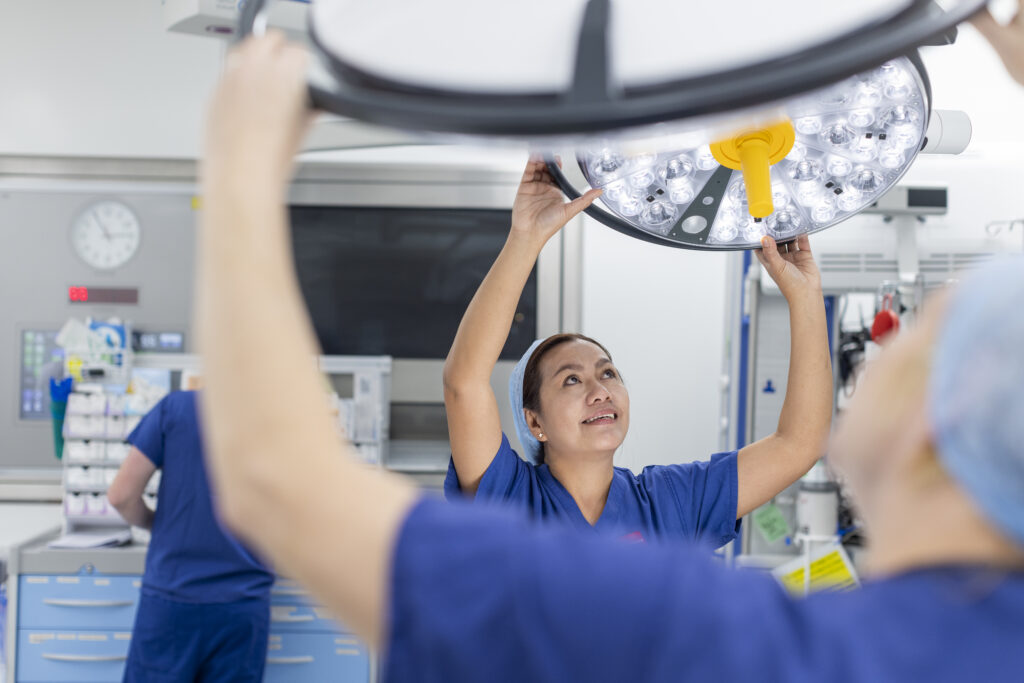
Laparoscopic Excision of Endometriosis
Laparoscopic excision of endometriosis not only helps in reducing the symptoms, but also enhances the quality of life for many women.
What is endometriosis?
Endometriosis is a chronic inflammatory condition where tissue similar (not identical) to the endometrial lining of the uterus grows outside the womb, most commonly on pelvic organs such as the ovaries, fallopian tubes, and peritoneum. It is a long-term condition that can affect a woman from her first period to the menopause. For some women, it can cause excruciating pain as well as affect fertility, and it is often difficult to diagnose.
Symptoms of endometriosis include:
- Painful periods
- Heavy periods
- Pain pre- or post-period
- Chronic abdominal or lower back pain
- Pain when urinating or with bowel movements
- Pain during or after sex
- Nausea, constipation, diarrhoea
- Difficulty conceiving
- In rare cases where the bladder or bowel is involved, you may experience blood in your urine or stools during your period.
Endometriosis can be hard to diagnose, as it presents in various ways and many other conditions, such as IBS, can cause similar symptoms.
According to the Royal College of Nursing, Endometriosis impacts 1 in 10 women of reproductive age across the UK. Currently, it takes an average of eight years to receive a diagnosis.
Treatment options
We want to help women who are suffering from endometriosis, and although there is currently no definitive cure, there are many treatment options available.
Hormonal treatments such as the combined pill, minipill, depot, implant or Mirena IUS can help manage symptoms by suppressing menstruation and reducing inflammation, though they do not eliminate endometrial tissue.
Surgical treatment options are often considered when other methods have not provided sufficient relief. These options include laparoscopic excision and more extensive surgery.
Laparoscopic surgery uses a laparoscope, a thin tube with a camera and light, to visualise the pelvic organs, remove endometrial tissue and any associated scar tissue. This type of surgery is often preferred due to its minimally invasive nature, which typically results in shorter recovery times and less post-operative pain. This surgical procedure aims to excise the endometrial growths completely, providing significant relief from symptoms.
In more severe cases, more extensive surgery may be necessary. This can involve the removal of endometrial tissue from the bowel or bladder, and in some cases, a section of these organs may need to be removed. The choice of surgical treatment depends on the severity of the endometriosis and the specific organs affected.
Please call to enquire about the price
Ways to payBefore surgery
If you think you might have endometriosis and are worried, or have an existing diagnosis and would like to discuss your treatment options, book an appointment with one of our experienced gynaecologists.
Our gynaecologists aim to provide a one-stop service so you can leave your appointment knowing your next steps. When you come in for an appointment, your consultant will take a detailed medical history and ask about your symptoms, including when they started, if they have been getting worse and where you feel pain.
They will then conduct a pelvic exam, which involves feeling areas in your pelvis to check for any unusual changes, and finish with an ultrasound scan. Whilst the ultrasound will not confirm endometriosis definitively, it will show your gynaecologist whether you have any endometriomas, which are cysts linked to the condition.
If deep endometriosis is suspected or more information is needed before surgery, your gynaecologist may refer you for an MRI to assess the extent and exact location of endometriosis. In some cases, a laparoscopy may then be recommended. This involves making a tiny cut near your belly button and placing a thin tube with a light and a camera called a laparoscope inside. This procedure gives your doctor a direct view of the location, extent and size of the endometriosis growths. In many cases, your doctor can treat your endometriosis during a laparoscopy by cutting it out (excision), so you need only one surgery.
It’s important to note that not everyone with endometriosis requires surgery, and the decision to undergo a laparoscopic excision will be made on a case-by-case basis after thorough discussion between you and your doctor. The severity of your symptoms, impact on quality of life, and reproductive goals are essential factors in the decision-making process.
Preparing for surgery
If you do decide to go ahead with a laparoscopic excision, we will help you prepare, but you should also try to eat healthily in the run-up and stop smoking if you can.
If you take any blood thinners, for example, Warfarin or aspirin, tell your gynaecologist straight away, as you may need to stop taking these or modify your intake from a week before surgery. Your gynaecologist will give you specific instructions if this is the case. You should also tell them if you take nonsteroidal anti-inflammatory drugs, such as ibuprofen.
You will also receive specific instructions regarding eating or drinking before surgery. If you take any prescription medications, bring them to the hospital with you. Your doctor will let you know if you can take these with a sip of water before your surgery or if you should wait until after your surgery.
It is also advisable to arrange for a family member or friend to assist you after surgery.
During surgery
Your surgery will be done under general anaesthesia so that you will be asleep.
Your surgeon will begin by making three or four small incisions in your abdomen. One will be in your belly button, one to the right of it and one to the left. Sometimes, one will also be made in the middle near your bikini line. A catheter (a small tube) will also be placed in your bladder. Additional incisions may be made to obtain a better view of the internal organs and to treat any found endometriosis or scar tissue effectively.
The surgeon will then inflate your abdomen with carbon dioxide gas to see your organs more clearly, and a laparoscope (a thin tube with a small camera and light) will be inserted into an incision.
Next, your surgeon will inspect your pelvic structures, looking for characteristic lesions or cysts associated with endometriosis. They will then begin to remove the endometriosis using specialised instruments. These growths may be situated on the:
- Uterus
- Ovaries
- The fallopian tubes
- Ureters (tubes that carry urine from the kidneys to the bladder)
- Back and side of the uterus
- Bladder
- Bowel
- Rectum
Once all the endometriosis has been cut out, the catheter will be removed, unless the endometriosis was affecting your bladder, in which case it will be kept in for another two weeks.
To finish, the cuts on your abdomen will be closed with dissolvable stitches and covered with a protective dressing. Bruising around the incision sites is common and should subside within a few days.
After surgery
After surgery, your surgical team will take you to our recovery area, where specialist staff will monitor your vital signs as you wake from anaesthesia. You will return home on the same day of your laparoscopic surgery.
It’s normal to feel some discomfort and pain in your lower abdomen for a few days after surgery. You may also have some light vaginal bleeding. When you get home, you should keep your dressing in place for two days. We recommend taking regular pain relief to help you remain active post-surgery. The doctor may also prescribe medication to prevent the build-up of new endometriosis tissue. This could include hormone therapy.
Recurrence of symptoms occurs in some patients over time – studies suggest around 20-50% may experience symptom return within 5 years, depending on the extent of excision and postoperative hormonal management.
In general, recovery from laparoscopic excision takes around four to six weeks. However, if you had a more extensive operation, this would take longer. There is also the possibility of follow-up procedures at a later date.
You will need to take one to two weeks off work, and some everyday activities will also be restricted for around four weeks. This includes:
- Driving
- High-impact sports
- Heavy lifting
Although the team will give you post-surgery advice, you should also:
- Eating a healthy and balanced diet
- Drink plenty of water
- Maintain a regular, gentle movement practice
After your laparoscopy, you’ll need to have follow-up appointments at around 2 and 6 weeks. This is to ensure your procedure recovery is progressing as expected.
Be mindful of your first period following your endometriosis surgery, as it might be more painful than usual. If you are struggling with the pain or are passing too many blood clots, speak with our team.
Risks and complications
As with any surgical procedure, laparoscopic surgery for endometriosis carries certain risks and potential complications. These can include injury to the bowel, bladder, or blood vessels during the procedure. Although rare, such injuries can lead to significant complications and may require additional surgical intervention.
Infection is another risk associated with any surgery, including laparoscopic procedures. Patients are closely monitored for signs of infection post-operatively to ensure prompt treatment if needed. Blood clots are also a potential risk, which is why patients are often advised to move around as soon as possible after surgery to promote circulation.
One of the more concerning risks is the possibility of endometriosis returning. While laparoscopic excision aims to remove all visible endometrial tissue, there is still a chance that the condition can recur, necessitating a second surgery in the future.
Appointment and Treatment Plan
Initial Consultation
Your gynaecologist will take a detailed history, do a pelvic exam and ultrasound, and may recommend an MRI. If needed, a laparoscopy will be suggested to confirm and treat endometriosis in one procedure.
Pre-op Preparation
Eat healthily, stop smoking, and inform your doctor about medications (especially blood thinners and NSAIDs). You’ll receive fasting instructions and should bring any prescriptions to the hospital. Arrange for someone to assist you after surgery.
Surgery
Under general anaesthetic, 3-4 small incisions are made. A camera (laparoscope) is used to inspect the pelvic organs. Endometriosis is excised (cut out) from areas like the uterus, ovaries, bladder, bowel, etc. Stitches are dissolvable, and you’ll go home the same day.
Immediate Recovery
Expect abdominal soreness, light vaginal bleeding, and bruising near the incision sites. Keep dressings on for 2 days. Take regular pain relief and rest. A catheter may be left in place if bladder involvement was treated.
Long-term Recovery
Recovery takes 4-6 weeks (longer if surgery was complex). Avoid driving, heavy lifting, and intense exercise for at least 4 weeks. Most people need 1-2 weeks off work. Support healing with gentle movement, plenty of water and nutritious food.
Follow-up Care
You’ll have check-ups at 2 and 6 weeks post-surgery. Hormonal treatment may be offered to reduce recurrence risk. Around 20-50% of patients may experience symptom return within 5 years. Be mindful of your first period post-op, as it may be more intense.
Experts
We are proud to provide patients with access to a wide range of clinicians, chosen specifically for their knowledge and reputation in their area of expertise. Our experts align with our values: putting you at the centre of your care and educating you on your options at each step of the journey. We encourage you to learn more about our clinicians and how they can help you below. As always, please contact our patient services team if you require any additional information.




We offer 3 ways to pay for your treatment
We exist to take the stress out of private healthcare.
Our payment options are designed to offer you easy access to our treatments and services. You can choose to pay on the day, spread the cost, or use your private medical insurance.
Our patient services team will guide you through the process, providing clear costs and support throughout your course of treatment so you can focus on the thing that matters most – your health.
Whether you pay in advance, spread the cost, or use your private medical insurance, rest assured you will be receiving exceptional care 365 days a year.
Pay in Advance
Even if you do not have medical insurance, you can still get quick and comprehensive access to private medical care.
We provide transparent pricing from your initial consultation to the completion of your treatment so you know where you stand, every step of the way.
We accept all major debit and credit cards, as well as Apple Pay for UK residents. Please note that we do not accept cash or cheques.
Spread the cost monthly
Paying for your treatment at One Stop Healthcare can be spread monthly from 12 to 60 months, rather than paying in one go.
With an upfront 10% deposit paid, via our Financial partner Chrysalis Finance, we offer various flexible terms to enable you to spread the cost, including 12-months at 0% APR. Click here to find out more.
Monthly payments need to be linked to a One Stop Healthcare treatment over £385 and is subject to a 14-day ‘cooling-off’ period before any treatment can start.
Your on-going payments will be made directly between Chrysalis and yourself. It’s that simple.
Pay using PMI
We are recognised by all major health insurance companies and with our extensive range of services, there are lots of benefits to using your insurance with us. Our patient services team is here to answer any questions you may have about using your private health insurance with us.
Please bring along your policy details including your scheme details, membership or policy number, expiry date and confirmation of eligibility to claim (i.e. your authorisation number). If you do not have these details with you, we will require payment from you on the day. Patients are liable for any amounts not settled by their insurer.
FAQs
Recovery time after laparoscopic excision of endometriosis varies depending on the extent of the surgery and individual patient factors. Typically, most patients can expect to resume light activities within one to two weeks, with a full recovery taking around four to six weeks. During this period, it is essential to avoid heavy lifting, intense exercise, and activities that may strain the abdomen to promote proper healing. Your surgeon will provide personalised guidance on when it is safe to return to work and normal daily activities. Some patients who undergo more extensive surgery involving other organs may require a longer recovery period.
While laparoscopic excision is considered minimally invasive compared to traditional open surgery, it is still a significant surgical procedure. It involves making small incisions in the abdomen to insert specialised instruments and a camera to locate and remove endometrial tissue. The surgery requires general anaesthesia and carries risks typical of any surgical intervention, such as bleeding, infection, and injury to surrounding organs. However, because it uses keyhole surgery techniques, the overall trauma to the body is reduced, leading to shorter hospital stays and faster recovery times compared to more extensive surgeries.
Pain experienced after a laparoscopy for endometriosis can vary widely among individuals. Many patients report mild to moderate abdominal discomfort and soreness around the incision sites for a few days following surgery. The use of carbon dioxide gas to inflate the abdomen during the procedure can sometimes cause shoulder or chest pain, which usually resolves within a day or two. Pain management strategies, including prescribed medications and over-the-counter pain relievers, are effective in controlling post-operative pain. It is normal to experience some pain during the initial recovery phase, but this typically improves steadily over time.
For many women suffering from moderate to severe endometriosis symptoms, laparoscopic excision surgery can be life-changing. By removing endometrial tissue and associated scar tissue, the surgery often leads to significant relief from pain, improved fertility, and enhanced quality of life. However, it is essential to understand that surgery is not a guaranteed cure, as endometriosis can sometimes recur. The decision to proceed with surgery should be made after careful discussion with your healthcare provider, considering symptom severity, impact on daily life, and other treatment options. Many patients find that the benefits of reduced pain and improved function outweigh the risks and recovery time associated with the procedure.
Laparoscopic surgery offers numerous benefits for those who have endometriosis. One of the primary advantages is the reduced recovery time compared to traditional open surgery. Because this minimally invasive procedure involves smaller incisions, patients typically experience less pain and can return to their normal activities more quickly.
Another significant benefit is the reduced risk of complications and scarring. Smaller incisions mean less trauma to the body, which in turn lowers the likelihood of infection and other post-operative complications. Additionally, laparoscopic surgery can improve fertility by removing endometrial tissue that may be affecting the reproductive organs.
Overall, laparoscopic surgery not only helps in reducing the symptoms of endometriosis but also enhances the quality of life for many women.
Medically reviewed by Ms Pushpa Maharajan - Consultant Gynaecologist/Obstetrician on 08/09/2025