

We’re upgrading our hospital and working to keep disruption to a minimum. Learn more.
Breast Implant Removal
Also known as: explant surgery
Breast implant removal aims to address complications, health concerns, or to achieve a more natural appearance.
What is breast implant removal surgery?
Breast implant removal surgery (explant surgery) is the procedure to remove breast implants from the body. This may be done with or without replacing the implants, depending on your goals and health needs.
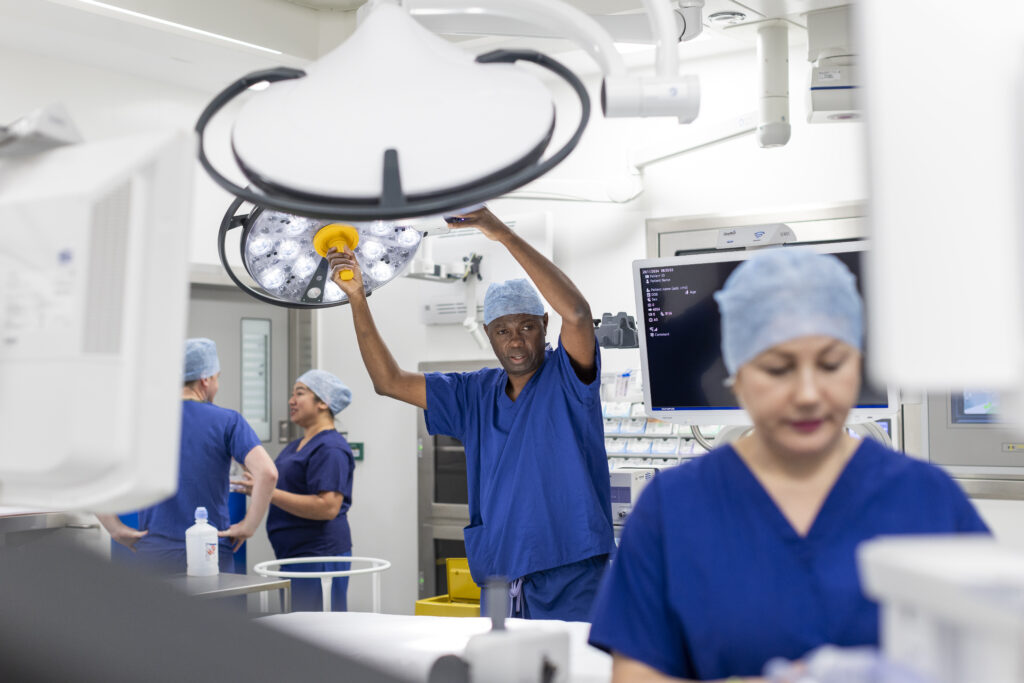
The procedure is performed under general anaesthetic and usually takes 1-3 hours. Most patients go home the same day. Surgeons often use the same incision sites as your original augmentation (such as under the breast crease or around the areola) to minimise new scarring.
Removal can be straightforward or more complex if surrounding scar tissue also needs to be taken out. The final breast shape varies depending on your original implant size, how long they were in place, and your skin’s natural elasticity.
Common reasons for breast implant removal
Medical complications
- Capsular contracture – a hard, painful tightening of the scar tissue around the implant. Severe cases often need an implant and capsule removal.
- Implant rupture – particularly with silicone implants, ruptures may not be immediately evident. Leaked material can cause pain, changes in shape, or inflammation. MRI scans are recommended to detect “silent” ruptures.
- Chronic pain or infection – rare, but if infections don’t respond to antibiotics, implant removal is usually required.
Breast Implant Illness (BII)
Some women report symptoms such as fatigue, joint pain, brain fog, and autoimmune-like problems, which they believe are linked to their implants. Some studies suggest 70-80% of women who undergo implant removal for BII-related symptoms report at least partial improvement. However, results vary, and a definite causal link between implants and these symptoms has not been proven.
Lifestyle and appearance
With ageing, weight changes, or lifestyle shifts, implants may no longer feel comfortable or look the way you want. Many women now prefer a more natural appearance or find that large implants interfere with physical activity.
Implant age and safety concerns
Implants are not lifetime devices. Many last more than 10-15 years, but the risk of rupture and other complications increases over time. Some women choose removal rather than replacement when their implants reach this stage.
In addition, concerns about specific types of implants, such as textured implants linked to BIA-ALCL (Breast Implant-Associated Anaplastic Large Cell Lymphoma), may prompt earlier removal. BIA-ALCL is very rare, usually confined to the scar tissue and fluid around the implant (not the breast itself), and is highly treatable when caught early.
Types of breast implant removal procedures
Simple implant removal
The implant is removed, but the scar tissue (capsule) is left behind. This is quicker and less invasive, but not suitable for everyone, especially if there is capsular contracture, rupture, or concern about BII.
Capsulectomy
Some or all of the scar tissue capsule is removed along with the implant. A total capsulectomy removes all capsule tissue, but this procedure is more complex and carries slightly higher surgical risks.
En bloc capsulectomy
The implant and the surrounding capsule are removed together as a single piece. This is essential for treating BIA-ALCL. For ruptured silicone implants, many surgeons also aim to remove the capsule intact to reduce leakage. However, this is not always technically possible if the capsule is thin or adherent to the chest wall.
Additional procedures are often combined with removal, such as:
- Breast lift (mastopexy) – removes excess skin and reshapes the breast after implant removal, improving contour and reducing drooping.
- Fat transfer (lipofilling) – uses fat from another part of your body to restore modest breast volume. Usually adds less than one cup size per session, and multiple sessions may be needed.
- Implant replacement – some women choose new implants, either to maintain volume, change size, or switch to a different type. This carries the same long-term responsibilities and risks as the original implants.
- Auto-augmentation – utilises your own breast tissue, reshaped internally, to enhance projection and contour without the need for implants or fat transfer.
- Staged approach – sometimes removal is done first, followed by a lift or fat transfer after a few months, to allow the tissues to heal and achieve more predictable results.
Please call to enquire about the price
Ways to payBefore the surgery
Pre-operative consultation and planning
Your initial consultation includes a comprehensive review of your medical history, current health status, and personal goals. The surgeon will examine your breasts, discuss your concerns, and explain which surgical technique is most appropriate. Imaging, such as a mammogram or MRI, may be recommended to check the implant condition and surrounding tissue.
At this stage, you’ll also discuss whether combining removal with other procedures, like a lift or fat transfer, would improve your final results. The surgeon will set realistic expectations about breast shape and size after removal, so that you feel prepared.
On the day of surgery
Upon arrival at the hospital, you’ll be checked in, asked to change into a gown, and have your vital signs monitored. Your surgical team will review the consent form and address any remaining questions you may have. An intravenous (IV) line will be placed to allow you to receive medications.
You’ll meet with your anaesthetist, who will review your health history and explain how you’ll be kept comfortable and safe. You’ll usually be asked not to eat or drink for several hours before surgery.
During the surgery
Once in the operating theatre, you’ll be given a general anaesthetic, so that you are completely asleep and pain-free.
Your surgeon will begin by making incisions, usually along your old scar lines (under the breast crease or around the areola). The choice of technique – simple removal, capsulectomy, or en bloc removal – depends on your pre-surgery plan and the findings during the operation.
The implants are carefully freed from the surrounding breast tissue. If capsule removal is needed, the surgeon may remove part or all of the scar tissue. In an en bloc removal, the implant and capsule are removed together as a single piece. If a rupture is found, special care is taken to clean out any leaked silicone.
If you are having a combined procedure, such as a breast lift or fat transfer, this is performed immediately afterwards. A lift reshapes and tightens the breast tissue. At the same time, fat transfer involves liposuction from another area of the body and the injection of fat into the breast to achieve a natural volume.
Once the implants are removed, the incisions will be closed with dissolvable or removable stitches. In some cases, a temporary drain is placed to collect fluid. Dressings will be applied, and you’ll be fitted with a supportive bra or compression garment to reduce swelling and aid healing.
Surgery time varies; simple implant removal may take 1-2 hours, while more complex procedures, especially with capsulectomy, en bloc removal, or combined cosmetic surgery, may take 3 hours or more.
After the surgery
Immediate post-surgery care
You’ll wake up in the recovery area and be monitored as the anaesthetic wears off. Grogginess, mild pain, or nausea are normal in the first few days. Most women are discharged home the same day once they are stable. You’ll receive detailed instructions for wound care, pain management, and follow-up appointments.
Long-term recovery
Weeks 1-2: Rest and gentle movement only. Swelling and discomfort peak during this time but improve steadily over time. Supportive garments are usually recommended.
Weeks 2-3: Energy levels improve. Driving and light activity are possible if you are off strong pain medication.
Weeks 4-6: Most daily activities can resume. Scars begin to fade, and breast shape continues to evolve.
After 6 weeks: Cleared for full activity, including exercise. Breasts may continue to settle for several months, with the final results becoming visible within 3-6 months. Scars will continue to fade for up to 18 months.
Signs requiring medical attention
Contact your surgeon promptly if you experience:
- Redness, swelling, warmth, or pus at the incision site
- Fever above 38.3°C
- Severe or worsening pain not controlled with medication
- Rapid swelling or bruising of the breast
- Chest pain, shortness of breath, or sudden asymmetry
Common risks and expected outcomes
- Scarring – inevitable, but usually fades well; existing scars are often reused.
- Bleeding or infection – uncommon, and usually mild; risk is lower than with implant replacement.
- Changes in breast shape – breasts may appear smaller, looser, or asymmetrical depending on skin elasticity and implant history. Additional procedures can help.
- Sensation changes – temporary numbness is common; permanent changes are rare.
Appointment and Treatment Plan
Pre-operative Consultation
Your surgeon reviews your medical history, examines your breasts, may recommend imaging, and discusses surgical options, combined procedures, and realistic expectations for results.
Preparation on the Day
At the hospital you change into a gown, have your vital signs checked, an IV line placed, and meet the anaesthetist; you’ll have fasted for several hours and sign final consent.
Surgery
Under general anaesthesia, the surgeon removes the implants using the agreed technique, with or without capsule removal, and performs any combined procedures such as a lift or fat transfer; incisions are closed, drains may be placed, and you are fitted with a supportive garment.
Immediate Post-surgery Care
You wake in recovery, are monitored as the anaesthetic wears off, and can usually go home the same day with instructions for wound care, pain management, and follow-up.
Long-term Recovery
Swelling and discomfort are expected in the first 1-2 weeks, light activity is possible by 2-3 weeks, most daily activities resume by 4-6 weeks, and full activity is usually cleared after 6 weeks, with final results settling over several months.
Experts
We are proud to provide patients with access to a wide range of clinicians, chosen specifically for their knowledge and reputation in their area of expertise. Our experts align with our values: putting you at the centre of your care and educating you on your options at each step of the journey. We encourage you to learn more about our clinicians and how they can help you below. As always, please contact our patient services team if you require any additional information.
We offer 3 ways to pay for your treatment
We exist to take the stress out of private healthcare.
Our payment options are designed to offer you easy access to our treatments and services. You can choose to pay on the day, spread the cost, or use your private medical insurance.
Our patient services team will guide you through the process, providing clear costs and support throughout your course of treatment so you can focus on the thing that matters most – your health.
Whether you pay in advance, spread the cost, or use your private medical insurance, rest assured you will be receiving exceptional care 365 days a year.
Pay in Advance
Even if you do not have medical insurance, you can still get quick and comprehensive access to private medical care.
We provide transparent pricing from your initial consultation to the completion of your treatment so you know where you stand, every step of the way.
We accept all major debit and credit cards, as well as Apple Pay for UK residents. Please note that we do not accept cash or cheques.
Spread the cost monthly
Paying for your treatment at One Stop Healthcare can be spread monthly from 12 to 60 months, rather than paying in one go.
With an upfront 10% deposit paid, via our Financial partner Chrysalis Finance, we offer various flexible terms to enable you to spread the cost, including 12-months at 0% APR. Click here to find out more.
Monthly payments need to be linked to a One Stop Healthcare treatment over £385 and is subject to a 14-day ‘cooling-off’ period before any treatment can start.
Your on-going payments will be made directly between Chrysalis and yourself. It’s that simple.
Pay using PMI
We are recognised by all major health insurance companies and with our extensive range of services, there are lots of benefits to using your insurance with us. Our patient services team is here to answer any questions you may have about using your private health insurance with us.
Please bring along your policy details including your scheme details, membership or policy number, expiry date and confirmation of eligibility to claim (i.e. your authorisation number). If you do not have these details with you, we will require payment from you on the day. Patients are liable for any amounts not settled by their insurer.
FAQs
Breasts are often smaller, softer, and less firm at first. Skin and tissue gradually adjust over a period of 3-6 months. Some women opt for a lift or fat transfer to achieve a more youthful contour.
Most women are satisfied by 6 months, though scars continue to fade for up to 18 months.
Yes. You may choose new implants, fat transfer, or a breast lift once healing is complete, usually after 3-6 months.
It is normal to experience some pain, swelling, and bruising immediately after breast implant removal surgery. Your surgeon will prescribe appropriate pain medication, often a combination of over-the-counter and prescription options. Pain typically diminishes over the first 2 weeks, and most patients find light activity comfortable after this period.
Recovery varies depending on the extent of the surgery and whether additional procedures like a breast lift or fat transfer were performed. Most women can return to office-type work in 1-2 weeks, but strenuous exercise and heavy lifting should be avoided for 4-6 weeks.
As with any surgical procedure, there are risks including infection, bleeding, scarring, and changes in breast sensation. Your surgeon will discuss these risks in detail during your consultation and guide you on how to minimise them.
Scarring is inevitable, but surgeons typically use existing incision sites to minimise new scars. Over time, scars usually fade and become less noticeable. Proper wound care and avoiding sun exposure can help improve the appearance of scars.
Yes, removal of implants often results in a deflated appearance due to loss of volume and stretched skin. Many patients choose to combine removal with a breast lift (mastopexy) or fat transfer to achieve a more natural and youthful breast shape.
Coverage depends on the reason for removal and your insurance provider. Medical reasons, such as implant rupture or capsular contracture, are more likely to be covered than purely cosmetic removal. You should verify this with your insurance provider before undergoing surgery.
Preparation includes a thorough medical evaluation, discussion of your goals with your surgeon, and following preoperative instructions such as fasting before surgery. You should arrange for someone to drive you home and help during the initial recovery period.
Yes, many patients opt for breast implant replacement or breast re-augmentation after removal. Some women have re-augmentation during the same surgery, though many surgeons recommend waiting several months to allow healing. Your surgeon will help you decide the best approach based on your breast size, skin condition, and personal preferences.
A capsulectomy procedure involves removing the protective scar tissue capsule that forms around breast implants. It is often necessary in cases of capsular contracture, implant rupture, or when treating Breast Implant Illness. This procedure can improve breast shape and reduce pain.
Yes, alternatives include breast uplift (mastopexy) to lift and reshape the breast without adding volume, or fat transfer (lipofilling) to restore some natural volume using your own body fat. These options can yield a natural-looking result without the need for new implants.
During your initial consultation, your surgeon will review your medical history, assess the quality of your breast tissue and skin, discuss your goals, and explain the surgical options available to you. Imaging techniques such as MRI or mammography may be recommended to evaluate the implant condition.
Following post-operative care instructions is crucial for optimal healing and minimising complications. This includes wearing supportive garments, avoiding heavy lifting and strenuous exercise, attending follow-up appointments, and monitoring for any signs of infection or unusual symptoms.
Studies suggest that around 70-80% of women with BII symptoms report some improvement after removal, though this varies.
After implant removal, breasts may look smaller or sag due to stretched skin. A lift or fat transfer can help restore shape if desired.