


Teeth whitening safely lightens your teeth for a brighter, more confident smile.
Teeth Whitening
Also known as: tooth bleaching, bleaching treatment, whitening treatment, professional teeth whitening, home whitening, tray-based whitening, peroxide whitening
What is teeth whitening?
Teeth whitening lightens the colour of your teeth and helps to remove stains and discolouration. This procedure is ideal for those looking to enhance the brightness of their smile without altering the structure of their teeth. Tooth discolouration can result from both intrinsic and extrinsic factors, including age-related yellowing, certain medication-related staining, and mild fluorosis. Some types of staining, such as tetracycline staining, deep white-spot lesions, or discolouration from older restorations, may not respond fully to whitening and may require alternative cosmetic treatments.
Using a whitening gel and custom-made trays, this treatment lightens the natural shade of teeth, making them look brighter and whiter. The custom-fit trays ensure even application of the whitening gel, maximising treatment effectiveness and minimising potential gum irritation. The active ingredient in most whitening gels is a bleaching agent, such as hydrogen peroxide or carbamide peroxide, which breaks down stain molecules on the enamel surface and within the enamel.
Please note that crowns, bridges and fillings cannot be whitened. Certain dental restorations, such as ceramic crowns and metallic compounds, do not respond to bleaching agents, and stains caused by metallic compounds may require alternative cosmetic solutions. It’s important to consider this when planning your treatment, as you may need additional procedures to ensure a uniform appearance across all dental work.
Teeth whitening is a popular cosmetic dentistry procedure that has gained significant attention for its ability to enhance a person’s smile and boost self-confidence.
Types of teeth staining
Tooth staining is generally classified into two distinct categories that affect your teeth differently: intrinsic and extrinsic staining. Intrinsic staining develops when the inner structure of your tooth, known as the dentin, becomes discoloured from within. This type of discolouration can result from various factors that affect your teeth during development or throughout your life, such as age-related changes that naturally occur over time, dental trauma that may have damaged the tooth’s internal structure, certain medications that can affect tooth colour, or excessive fluoride exposure during childhood when teeth are developing. Intrinsic stains are often more challenging to treat effectively. Some intrinsic stains may respond to whitening, while others, such as white-spot lesions, usually require treatments like microabrasion, resin infiltration, or veneers.
Extrinsic staining, on the other hand, affects the outer surface of your teeth explicitly and is typically more manageable than intrinsic discolouration. This type of staining is commonly caused by environmental factors and lifestyle habits that can impact your oral health, such as smoking tobacco products, frequent consumption of staining beverages like coffee, tea, or red wine, or eating foods with intense pigments that can adhere to tooth surfaces. Poor oral hygiene can also significantly contribute to the buildup and persistence of extrinsic stains on your teeth. Fortunately, extrinsic staining often responds well to various tooth whitening products and treatments, including professional-grade whitening gel and comprehensive treatments provided by qualified dental professionals who understand your specific needs.
Identifying whether your teeth are affected by intrinsic or extrinsic staining is essential for selecting the most effective whitening products and achieving optimal results for your individual situation. Dental professionals at One Stop Dental can thoroughly assess your teeth and oral health condition, helping you understand the nature of your tooth discolouration and recommend the best approach for your specific case, whether it involves professional teeth whitening procedures or other cosmetic treatments that are carefully tailored to meet your unique needs and oral health goals.
Before treatment
Dental moulds (impressions) will be taken of your teeth and sent to a dental laboratory to produce the custom-made trays. This ensures that the trays fit perfectly, providing optimal contact with your teeth for the whitening process.
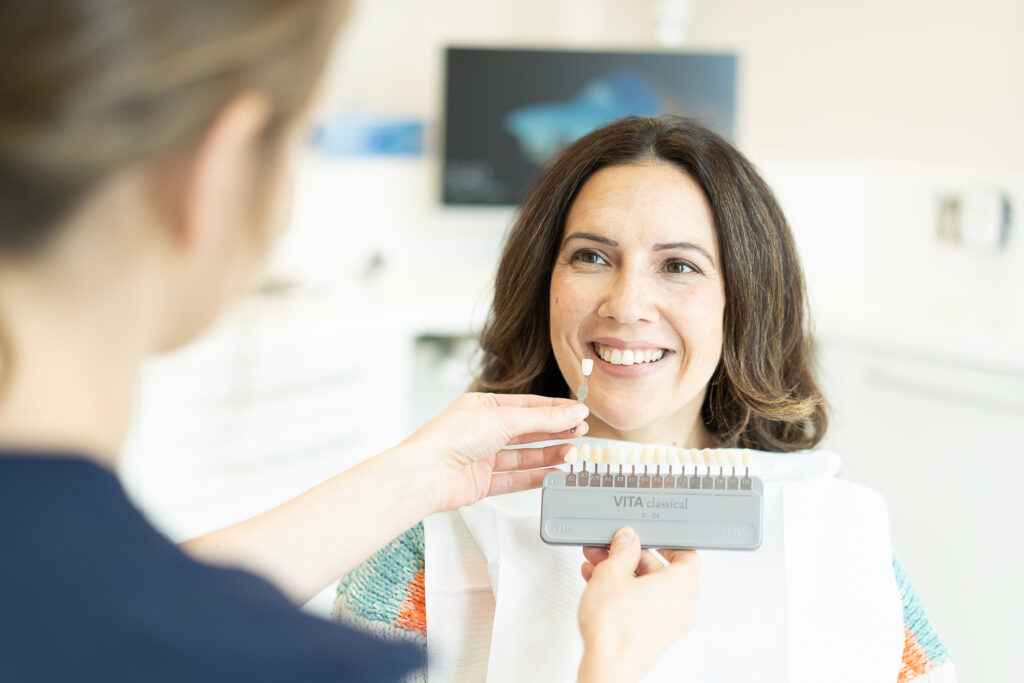
The shade of your current teeth will be recorded, and photographs will be taken. This is to compare the pre- and post-whitening results. Documenting your progress lets you see tangible improvements in your smile and assess the effectiveness of your treatment.
During treatment
Two weeks after the initial appointment, you will have a fitting appointment, during which the dentist will check that the custom-made trays fit comfortably and give you instructions on how to use the whitening gel.
Tray-based tooth whitening systems involve using a fitted tray containing a bleaching gel worn for several hours or overnight.
The dentist will explain the process in full, and you will have the opportunity to ask any questions. This ensures you are comfortable and confident in using the whitening kit at home.
Then you will be ready to use your whitening kit at home. Following the dentist’s guidance, you can achieve professional-level results in the comfort of your own home, at a pace that suits your lifestyle.
Hydrogen peroxide gels are usually worn for shorter daytime sessions (around 20–90 minutes), while carbamide peroxide gels are gentler and can be worn for longer periods, including overnight.
After treatment
After completing your whitening treatment, maintaining your results is simple with good daily care and a few lifestyle habits. Brushing twice a day and cleaning between your teeth will help prevent new surface stains from building up. Using a whitening toothpaste can also help maintain brightness by gently removing everyday staining, although it won’t lighten the natural colour of your teeth.
To keep your teeth whiter for longer, it’s a good idea to limit foods and drinks that commonly cause staining, such as coffee, tea, red wine, and strongly coloured berries. Avoiding or reducing tobacco use is especially important, as it can quickly lead to new stains and also impact your overall oral health.
If you notice any sensitivity after whitening, this is usually temporary. Your dentist may recommend a desensitising toothpaste or mouthwash containing ingredients such as potassium nitrate to help calm sensitivity. Most patients find that this settles within a few days.
Your dentist may also suggest occasional at-home top-up whitening to maintain your results over time. These touch-ups are typically straightforward and use the same custom-made trays provided during your original treatment.
Regular dental check-ups allow your dentist to monitor your oral health, assess the longevity of your whitening results, and offer advice on maintaining your smile’s brightness. With good care and periodic maintenance, you can enjoy your beautifully whitened smile for many years.
Appointment and Treatment Plan
01
Initial Appointment
Your dentist takes impressions of your teeth to create custom whitening trays that fit securely and evenly. Your current tooth shade is recorded and photos are taken so you can clearly see your before-and-after results.
Tray Fitting & Instructions
Around two weeks later, your trays are fitted and checked for comfort. Your dentist explains how to use the whitening gel safely and effectively and answers any questions, preparing you to carry out the whitening process confidently at home.
02
03
At-Home Whitening
You apply the bleaching gel to your custom trays and wear them as instructed—hydrogen peroxide gels typically for 20–90 minutes, and gentler carbamide peroxide gels for longer periods or overnight. This allows you to whiten your teeth gradually at your own pace.
Caring for Your Results
Maintain your whitened smile by brushing twice daily, cleaning between your teeth, and limiting staining foods, drinks, and tobacco. Temporary sensitivity may occur and can be eased with desensitising products. Your dentist may recommend occasional top-up whitening and routine check-ups to keep your smile bright for the long term.
04
Experts
We are proud to provide patients with access to a wide range of clinicians, chosen specifically for their knowledge and reputation in their area of expertise. Our experts align with our values: putting you at the centre of your care and educating you on your options at each step of the journey. We encourage you to learn more about our clinicians and how they can help you below. As always, please contact our patient services team if you require any additional information.




We offer 3 ways to pay for your treatment
We exist to take the stress out of private healthcare.
Our payment options are designed to offer you easy access to our treatments and services. You can choose to pay on the day, spread the cost, or use your private medical insurance.
Our patient services team will guide you through the process, providing clear costs and support throughout your course of treatment so you can focus on the thing that matters most – your health.
Whether you pay in advance, spread the cost, or use your private medical insurance, rest assured you will be receiving exceptional care 365 days a year.
Pay in Advance
Even if you do not have medical insurance, you can still get quick and comprehensive access to private medical care.
We provide transparent pricing from your initial consultation to the completion of your treatment so you know where you stand, every step of the way.
We accept all major debit and credit cards, as well as Apple Pay for UK residents. Please note that we do not accept cash or cheques.
Spread the cost monthly
Paying for your treatment at One Stop Healthcare can be spread monthly from 12 to 60 months, rather than paying in one go.
With an upfront 10% deposit paid, via our Financial partner Chrysalis Finance, we offer various flexible terms to enable you to spread the cost, including 12-months at 0% APR. Click here to find out more.
Monthly payments need to be linked to a One Stop Healthcare treatment over £385 and is subject to a 14-day ‘cooling-off’ period before any treatment can start.
Your on-going payments will be made directly between Chrysalis and yourself. It’s that simple.
Pay using PMI
We are recognised by all major health insurance companies and with our extensive range of services, there are lots of benefits to using your insurance with us. Our patient services team is here to answer any questions you may have about using your private health insurance with us.
Please bring along your policy details including your scheme details, membership or policy number, expiry date and confirmation of eligibility to claim (i.e. your authorisation number). If you do not have these details with you, we will require payment from you on the day. Patients are liable for any amounts not settled by their insurer.
FAQs
Choosing the best tooth whitening products depends on several factors, including the type of tooth staining, your sensitivity levels, and whether you prefer at-home treatments or professional services. There is a wide range of options available, from over-the-counter whitening toothpastes and strips to dentist-prescribed whitening kits and in-office treatments.
Whitening toothpastes are a popular choice for removing surface stains and maintaining a brighter smile. They typically contain mild abrasives or polishing agents that help lift surface stains from foods, drinks, and smoking. However, they do not contain bleaching agents and cannot change the underlying colour of your teeth.
For more significant whitening, home teeth whitening kits prescribed by dental professionals usually contain carbamide peroxide bleaching gel in custom-fitted trays. These kits offer a balance between convenience and effectiveness, allowing users to achieve professional-level results safely at home. The trays ensure even application of the whitening gel, reducing the risk of gum irritation and maximising bleaching efficacy.
When selecting a tooth whitening product, it is crucial to consider safety and efficacy. Products containing bleaching agents should be used according to the manufacturer’s instructions or under a dental professional’s supervision to avoid potential side effects, such as gum irritation, surface roughness, and increased tooth sensitivity. Avoiding unregulated whitening products or non-dental providers helps ensure your teeth and gums remain protected.
Ultimately, the best tooth whitening product is one that suits your individual needs, effectively removes stains, maintains the health and integrity of your tooth enamel, and delivers a whiter, brighter smile.
While dental bleaching procedures can significantly enhance aesthetic outcomes and improve the appearance of the smile, dentists must inform patients of potential adverse effects and contraindications associated with these treatments. One of the most frequently reported complications is dental hypersensitivity (tooth sensitivity), which develops when bleaching agents such as hydrogen peroxide or carbamide peroxide penetrate the enamel matrix and irritate the underlying dentin-pulp complex. This sensitivity response is typically transient but can cause significant discomfort, particularly in patients with pre-existing dentinal hypersensitivity or compromised enamel integrity.
Gingival irritation (gum inflammation) represents another documented side effect, especially when whitening gel formulations come into direct contact with the oral mucosa and soft tissues. Aggressive bleaching protocols or overuse of whitening products can increase the risk of enamel sensitivity or surface roughening, compromising tooth structure and increasing susceptibility to future staining and enhanced sensitivity. In rare cases, individuals may develop allergic contact dermatitis or hypersensitivity reactions to specific bleaching agents or their components.
To minimise these clinical risks and ensure patient safety, patients must follow treatment protocols established by qualified dental professionals and use only clinically approved whitening formulations. Regular dental consultations and follow-up appointments allow your healthcare provider to monitor oral health status, assess treatment efficacy, and promptly address any emerging complications, ensuring patients achieve optimal aesthetic results while maintaining oral health integrity and preventing adverse outcomes.
Yellow teeth can often be whitened effectively through professional teeth whitening treatments or at-home whitening products, depending on the cause and severity of the discolouration. Intrinsic stains, which originate within the tooth, may require professional-strength bleaching products or specialist whitening approaches, as they are more resistant to treatment. In contrast, extrinsic stains caused by surface factors such as food, drink, or smoking can often be treated with whitening toothpastes or over-the-counter whitening strips. It is essential to consult with a dental professional to determine the most suitable treatment option, as some types of staining or dental restorations may not respond to whitening treatments. With proper care and maintenance, many people can successfully restore a brighter, whiter smile and reduce the appearance of yellowing.
Medically reviewed by Dr Julia Panteli - Dentist