


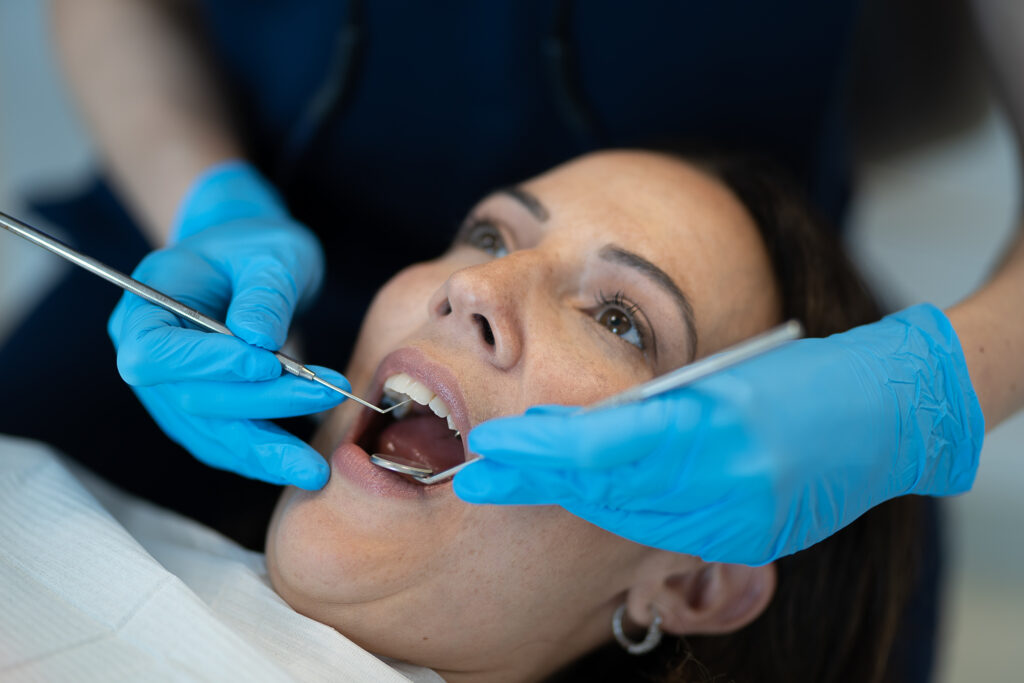
Root Canal Treatment (Endodontics)
Also known as: root canal therapy, endodontic therapy, and pulp therapy
Modern endodontics has transformed root canal treatment into a comfortable, predictable way to preserve natural teeth, helping you maintain long-term oral health with confidence.
What is endodontic treatment?
Endodontics is a specialised branch of dentistry that focuses on the dental pulp and the tissues surrounding the root of the tooth. The word “endodontics” comes from the Greek words “endo” (inside) and “odont” (tooth), literally meaning treatment of the inside of the tooth.
Endodontic treatment preserves natural teeth by treating infected or damaged pulp tissue rather than extracting the tooth. The dental pulp contains nerves, blood vessels, and connective tissue that nourish the tooth during development. When this tissue becomes infected or severely inflamed due to deep decay, trauma, or repeated dental procedures, endodontic treatment becomes necessary to save the tooth.
Endodontists specialise in diagnosing tooth pain and treating diseases affecting the tooth’s interior structures. While general dentists can perform many endodontic procedures, complex cases often require the additional training and expertise of endodontists.
Endodontic procedures include root canal therapy, retreatment of previously treated root canals, surgical procedures such as apicoectomy (root-end resection), and regenerative endodontic procedures for immature teeth. Endodontic care also includes treatments like pulp capping, pulpotomy, apexification, and regenerative procedures for young teeth that are still developing. The primary goal remains consistent across all treatments: saving the natural tooth rather than extracting it, which maintains proper chewing function, prevents adjacent teeth from shifting, and preserves the surrounding bone structure.
If you’re experiencing tooth pain or have been told you need endodontic treatment, don’t delay seeking care. Early intervention improves treatment outcomes and prevents complications that could compromise your tooth’s long-term health. Consult with your dentist to determine if endodontic treatment is right for your situation and take the first step toward preserving your natural tooth for years to come.
What is root canal treatment?
Root canal treatment involves removing infected or damaged pulp from inside the tooth, followed by thorough cleaning, disinfection, and sealing of the root canal system. This procedure is necessary when bacteria enter the pulp chamber through deep cavities, cracks, chips, or failed restorations, leading to infection or irreversible inflammation.
The anatomy of dental pulp includes a complex network of nerves, blood vessels, and connective tissues housed within the pulp chamber and extending through narrow channels called root canals. Each tooth may have one to four root canals, depending on its type and location in the mouth. When bacteria invade this space, they multiply rapidly in the warm, nutrient-rich environment, leading to pain, swelling, and, if left untreated, eventual pulp death.
Understanding the difference between reversible and irreversible pulpitis helps explain when root canal treatment becomes necessary. Reversible pulpitis occurs when the pulp is mildly inflamed but still capable of healing once the irritant is removed, often with a filling that treats a cavity before it reaches the pulp. Irreversible pulpitis, however, means the pulp tissue is so severely damaged that it cannot heal and will eventually die, requiring root canal therapy to prevent abscess formation and tooth loss.
The entire root canal system must be thoroughly cleaned and sealed to prevent reinfection. Modern techniques use advanced irrigation solutions, such as sodium hypochlorite, to eliminate bacteria, while nickel-titanium rotary instruments efficiently shape the canals. Endodontists use advanced technology, such as dental operating microscopes and 3D imaging, to improve diagnosis and treatment. This process removes all infected tissue and creates space for the filling material called gutta-percha, which seals the canal system three-dimensionally.
Please call to enquire about the price
Ways to payBefore treatment
The journey toward endodontic treatment begins with a comprehensive consultation process that includes symptom evaluation and medical history review. Your dentist will ask detailed questions about your pain patterns, triggers, duration, and intensity to help pinpoint the source of your discomfort. This information, combined with your medical history, helps determine the appropriate treatment approach and identify any factors that might affect healing.
Diagnostic procedures form the foundation of accurate treatment planning. The clinical examination includes visual inspection, percussion tests to assess sensitivity to tapping, and cold-sensitivity testing with refrigerant spray or ice. These tests help differentiate between various dental conditions and identify which tooth requires treatment. Advanced diagnostic techniques may include electric pulp testing and bite tests to pinpoint the problem tooth further.
Radiographic imaging plays a crucial role in endodontic diagnosis and treatment planning. Periapical X-rays provide detailed views of the tooth root and surrounding bone, revealing signs of infection, root anatomy, and the extent of any damage. In complex cases, your dentist might recommend CBCT scans, which provide three-dimensional imaging to visualise root canal anatomy and periapical lesions better.
Pre-treatment instructions may include antibiotic therapy only when there are signs of a spreading infection, such as fever, facial swelling, or systemic symptoms, since antibiotics alone cannot cure a dental infection. They control the spread of bacteria while you arrange for definitive treatment. Pain management with anti-inflammatory medications like ibuprofen often provides more effective relief than antibiotics for typical endodontic pain.
Treatment planning involves a detailed discussion of the procedure, alternative treatments, costs, and expected outcomes. Your dentist will obtain informed consent by explaining the benefits and risks of root canal treatment, the consequences of no treatment, and alternative options, such as extraction followed by implant placement or bridge work. This conversation ensures you understand the time and cost required for successful treatment.
During treatment
Root canal treatment is usually completed in 1 to 3 visits, depending on the number of roots in the tooth and whether an infection is present. Most appointments last about an hour, and the procedure should be comfortable throughout.
Your dentist will begin by gently numbing the tooth and surrounding area so you do not feel pain during the procedure. Once the area is fully numb, a small protective sheet called a rubber dam is placed around the tooth. This keeps the area clean, dry, and free of saliva, allowing the treatment to be carried out safely.
Your dentist will then create a small opening in the top of the tooth to reach the inflamed or infected pulp inside. This opening is kept as small as possible to preserve the remaining tooth structure.
Once inside the tooth, the dentist carefully removes the damaged or infected pulp. Small, flexible instruments are used to clean and shape the inside of each root canal. This provides enough space for the filling material to be placed later.
To ensure all bacteria are removed, the canals are repeatedly rinsed with specialised disinfecting solutions. These liquids reach areas that instruments cannot touch and help ensure the tooth is thoroughly cleaned.
After the canals are thoroughly cleaned and dried, they are filled with a rubber-like material called gutta-percha along with a sealing paste. This combination prevents bacteria from re-entering the tooth in the future. The dentist then places a temporary or permanent filling to close the small opening made at the start of the procedure.
If a temporary filling is used, it’s important to return for the final restoration, usually a crown, within a few weeks. This protects the tooth from breaking and prevents bacteria from contaminating the tooth’s interior again.
A final X-ray is usually taken to confirm that the canals are filled and to provide a record for future comparison. After that, you can go home and resume normal activities once the numbness wears off.
After treatment
Immediate post-treatment care focuses on managing any discomfort and preventing complications during the initial healing period. Most patients experience mild to moderate discomfort for 24-48 hours after treatment, which is easily managed with over-the-counter pain medications.
The normal healing process usually takes 3-7 days, during which any post-treatment sensitivity gradually reduces. Some patients may experience slight tenderness when biting down on the treated tooth because the tissues around the root tip may be slightly inflamed from the treatment.
You should contact your dentist immediately if you experience severe pain that worsens rather than improves, significant swelling of your face or gums, or if your temporary filling becomes loose or falls out. While complications are uncommon, prompt attention prevents minor issues from becoming major problems. Severe, throbbing pain or facial swelling may indicate incomplete treatment or additional infection requiring immediate care.
You will typically have a follow-up appointment within 2 to 4 weeks of completing root canal treatment. During this visit, your dentist will remove the temporary filling, assess healing, and begin the restoration process.
Long-term care requires placing a crown or onlay to protect the treated tooth from fracture and restore normal function. Endodontically treated teeth can become more prone to fracture, mainly because of the decay or damage that necessitated treatment and the access opening created during the procedure. Tooth discolouration as a result of root canal treatment can occur if the pulpal tissue remnants are not completely removed. A crown distributes chewing forces evenly across the tooth, significantly reducing fracture risk and ensuring long-term success of the endodontic treatment.
Periodic radiographic evaluation enables early detection of problems that may develop over time. Follow-up X-rays are typically taken at six months, one year, and then annually or as needed. These radiographs assess the healing of any periapical lesion and ensure the treated tooth remains healthy. Successful treatment shows complete healing of any infection and maintenance of healthy bone around the tooth root.
Appointment and Treatment Plan
Initial Consultation
Your dentist reviews your symptoms, medical history, and performs tests such as tapping, cold tests, bite tests, and X-rays. In some cases, a CBCT scan is taken for a clearer view. Treatment options, risks, benefits, and costs are explained before proceeding.
Preparation
If there are signs of spreading infection, antibiotics may be prescribed. Pain is typically managed with anti-inflammatory medication. Your dentist confirms the treatment plan and obtains your consent.
Root Canal Treatment
The tooth is numbed and isolated with a rubber dam. A small opening is made, the infected pulp is removed, and the canals are cleaned, shaped, disinfected, and filled with gutta-percha. A temporary or permanent filling seals the tooth, and an X-ray confirms completion.
Initial Healing
Mild discomfort for 24-48 hours is normal. Contact your dentist if you experience severe pain, swelling, or a lost temporary filling.
Final Restoration & Follow-Up
A follow-up visit is scheduled to assess healing and place a crown or onlay to protect the tooth. Periodic X-rays ensure long-term success.
Experts
We are proud to provide patients with access to a wide range of clinicians, chosen specifically for their knowledge and reputation in their area of expertise. Our experts align with our values: putting you at the centre of your care and educating you on your options at each step of the journey. We encourage you to learn more about our clinicians and how they can help you below. As always, please contact our patient services team if you require any additional information.



We offer 3 ways to pay for your treatment
We exist to take the stress out of private healthcare.
Our payment options are designed to offer you easy access to our treatments and services. You can choose to pay on the day, spread the cost, or use your private medical insurance.
Our patient services team will guide you through the process, providing clear costs and support throughout your course of treatment so you can focus on the thing that matters most – your health.
Whether you pay in advance, spread the cost, or use your private medical insurance, rest assured you will be receiving exceptional care 365 days a year.
Pay in Advance
Even if you do not have medical insurance, you can still get quick and comprehensive access to private medical care.
We provide transparent pricing from your initial consultation to the completion of your treatment so you know where your stand, every step of the way.
We accept all major debit and credit cards, as well as Apple Pay for UK residents. Please note that we do not accept cash or cheques.
Spread the cost monthly
Paying for your treatment at One Stop Healthcare can be spread monthly from 12 to 60 months, rather than paying in one go.
With an upfront 10% deposit paid, via our Financial partner Chrysalis Finance, we offer various flexible terms to enable you to spread the cost, including 12-months at 0% APR. Click here to find out more.
Monthly payments need to be linked to an One Stop Healthcare treatment over £385 and is subject to a 14-day ‘cooling-off’ period before any treatment can start.
Your on-going payments will be made directly between Chrysalis and yourself. It’s that simple.
Pay using PMI
We are recognised by all major health insurance companies and with our extensive range of services, there are lots of benefits to using your insurance with us. Our patient services team is here to answer any questions you may have about using your private health insurance with us.
Please bring along your policy details including your scheme details, membership or policy number, expiry date and confirmation of eligibility to claim (i.e. your authorisation number). If you do not have these details with you, we will require payment from you on the day. Patients are liable for any amounts not settled by their insurer.
FAQs
Modern root canal treatment is typically comfortable, with most patients experiencing little to no pain during the procedure. Local anaesthetic effectively numbs the entire area, and additional anaesthetic can be administered if needed. The widespread fear of root canal pain stems from outdated experiences before modern anaesthetic techniques and pain management protocols.
Post-treatment discomfort is usually mild and well-controlled with over-the-counter medications. Ibuprofen provides excellent anti-inflammatory and pain-relieving effects for 24-48 hours, during which most patients experience some tenderness. Many patients report that the relief from their original tooth pain far outweighs any temporary post-treatment discomfort.
If you’re particularly anxious about the procedure, discuss sedation options with your dentist. Oral sedation, nitrous oxide, or IV sedation can help you relax during treatment while maintaining the safety and effectiveness of local anaesthesia for pain control.
Most root canal treatments require 1-3 appointments, each lasting 60-90 minutes, depending on the tooth’s complexity and the severity of the infection. Simple cases, particularly front teeth with single canals, may be completed in one visit. Complex cases, such as molars with multiple canals or severe infections, may require additional appointments for optimal results.
Factors affecting treatment time include the tooth’s anatomy, the presence and extent of infection, canal calcification, and any complications that arise during treatment. Your dentist will provide a realistic timeline during the consultation based on your specific situation.
Between appointments, a temporary filling protects the tooth, and medication may be placed inside the canals to continue disinfecting the area.
Tooth extraction represents the primary alternative to root canal treatment, followed by replacement with an implant, bridge, or partial denture. While extraction may seem more straightforward initially, replacement options involve additional time, cost, and complexity compared to preserving the natural tooth.
Dental implants, the preferred replacement option, require surgical placement and 3-6 months of healing before the crown can be attached. The total treatment time and cost typically exceed root canal treatment with a crown. Additionally, implants require excellent bone quality, which may necessitate additional bone grafting procedures.
Bridge work involves preparing adjacent teeth for crowns to support the replacement tooth, permanently altering healthy teeth. Partial dentures are the least expensive replacement option, but they provide inferior function compared to natural teeth or implants.
Initial root canal treatment has success rates of 85-95% when performed according to contemporary standards and properly restored. Success depends on multiple factors, including case complexity, the thoroughness of cleaning and disinfection, the quality of the seal, and the timely placement of an appropriate restoration.
Retreatment cases, where previous root canal treatment has failed, have slightly lower success rates of 75-85%. However, retreatment is often a viable option before considering extraction, primarily when the original treatment was performed with older techniques or materials.
Factors that improve success rates include prompt treatment before extensive infection develops, complete cleaning and filling of all canals, proper coronal seal placement, and maintaining good oral hygiene. Regular dental checkups allow early detection of any problems that might compromise treatment success.
Long-term studies show that successfully treated teeth can last a lifetime with proper care and restoration. The investment in endodontic treatment and restoration typically provides decades of comfortable function, making it one of dentistry’s most cost-effective procedures for preserving oral health.
An endodontist is a dental specialist who focuses exclusively on diagnosing, treating, and preventing diseases and injuries of the dental pulp and the tissues surrounding the roots of teeth. Their expertise lies in managing complex cases involving tooth pain, infections, trauma, and root canal complications that require advanced techniques beyond general dentistry. Endodontists perform root canal treatments, retreatments, and endodontic surgeries, such as apicoectomies (root-end resections), to save teeth that might otherwise require extraction. They use specialised equipment, including dental operating microscopes, electronic apex locators, and 3D imaging (CBCT scans), to accurately diagnose issues and perform precise treatments. Additionally, endodontists are skilled in managing dental trauma cases involving cracked, dislodged, or knocked-out teeth, as well as diagnosing and treating complex facial pain related to tooth pulp problems.
Reasons for referral include teeth with complicated root canal anatomy, previous root canal treatments that have failed or developed new infections (requiring retreatment), severe infections or abscesses near the root tip, or situations where surgical intervention such as endodontic surgery is needed. Endodontists’ advanced training and experience allow them to manage complex cases with higher success rates and fewer complications. Referral may also occur when a patient’s tooth pain is difficult to diagnose or when specialised diagnostic tools are needed to identify its source. By consulting an endodontist, patients benefit from expert care aimed at preserving their natural teeth and relieving pain effectively.
Endodontists primarily focus on treating the dental pulp and root canal system rather than performing routine dental cleanings. While they are fully qualified dentists and may perform various dental procedures, their specialised role typically does not include routine prophylactic cleanings, such as scaling and polishing. General dentists or dental hygienists usually perform these routine cleanings to maintain oral health and prevent gum disease. However, during endodontic procedures, endodontists meticulously clean and disinfect the entire root canal system using fine files and strong chemicals, such as sodium hypochlorite, to remove infected and damaged pulp tissue. This cleaning is critical to eliminate bacteria, prevent reinfection, and ensure the long-term success of root canal treatment.