


Broken Clavicle Surgery
Also known as: broken collarbone, clavicle fracture, fractured clavicle, collarbone break, displaced clavicle fracture, mid-shaft clavicle fracture
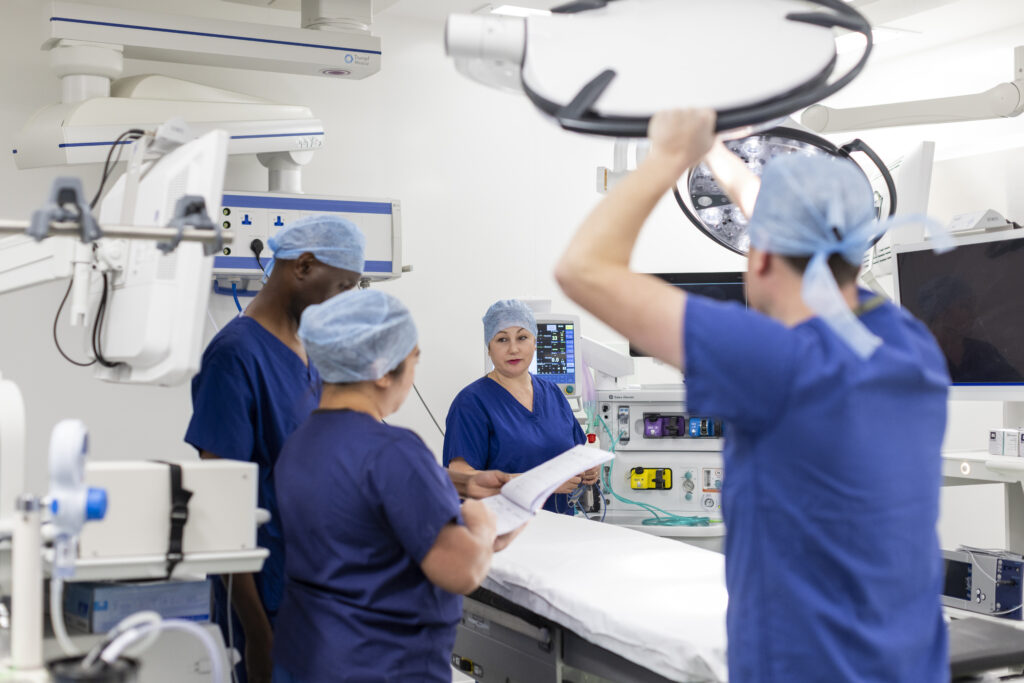
Broken clavicle surgery helps realign and stabilise a fractured collarbone to support healing, relieve pain, and restore shoulder function.
What is a clavicle fracture?
The clavicle, or collarbone, is a long, thin bone that runs horizontally between the top of the breastbone (sternum) and the shoulder blade (scapula). It is a key bone in the shoulder girdle, connecting the shoulder blade to the sternum and providing structural support to the upper body. A clavicle fracture (broken collarbone) is a common injury that occurs when this bone breaks, often as a result of a fall onto the shoulder, a direct blow, or trauma such as a car accident. Clavicle fractures are among the most frequent adult fractures, especially in active individuals.
Clavicle fractures can vary in severity. Some breaks are simple and remain well-aligned, while more serious fractures, such as those with a displaced clavicle or multiple breaks, may require different treatment approaches. In some cases, the broken bone ends may move out of place (displacement), which can be seen on imaging. The specific area where the bone breaks is called the fracture site. Severe fractures can sometimes cause the bone to tent or threaten to break through the skin, which requires urgent medical assessment as it may indicate an open fracture. If the injury is severe or there are concerns about skin or nerve involvement, please call 999 or head to your nearest A&E immediately.
Diagnosis of a clavicle fracture typically involves a physical examination and imaging tests such as X-rays or CT scans. These imaging tests help visualise bones and assess injuries to surrounding soft tissues, providing important information about the fracture’s location, type, and severity.
Causes and diagnosis
A clavicle fracture, which you may know as a broken collarbone, typically results from a direct impact to your shoulder or when you fall onto an outstretched arm. These injuries are common if you participate in contact sports, experience cycling or car accidents, or have falls. The force from the impact causes your clavicle bone to break, which may result in visible deformity or noticeable swelling over the collarbone, although not all fractures appear visibly displaced.
Please call to enquire about the price
Ways to payBefore surgery
Initial consultation
When diagnosing your clavicle fracture, your healthcare provider will begin with a thorough physical examination, carefully assessing your shoulder, collarbone, and surrounding areas for tenderness, swelling, and any abnormal movement. To confirm your diagnosis and determine the exact location and severity of your break, X-rays are typically performed. These images help your doctor identify whether your fracture is in the middle of the clavicle (called the shaft), near where the bone attaches to your shoulder blade, or close to your sternum (breastbone). In more complex cases, such as when your fracture involves multiple bone fragments or there are concerns about potential complications, your doctor may use a CT scan to get a more detailed view. Classifying the type of clavicle fracture you have is essential, as it guides the most appropriate treatment plan for your specific situation and helps your healthcare provider predict how your healing process will progress.
Non-surgical treatment
For many clavicle fractures, especially those where your bone fragments remain in alignment or are only slightly displaced, non-surgical treatment is often the preferred approach for your recovery. This conservative treatment typically involves you wearing a sling or shoulder immobiliser to support your arm and keep the broken pieces of bone in the correct position, allowing your clavicle to heal naturally. Pain management is integral to your recovery. It may include you taking pain medication and applying ice packs to reduce swelling and ease your discomfort during the initial healing period.
As your healing progresses, gentle exercises are introduced, usually after about 2 weeks, to help restore shoulder strength and improve range of motion. You must follow the guidance of your orthopaedic surgeon and attend all your follow-up appointments to monitor how your bone heals and to ensure your fracture is mending properly. With patience and adherence to your treatment plan, most patients experience a full recovery without surgery, typically returning to normal activities within several weeks to a few months, depending on the rate of healing.
During surgery
During broken clavicle surgery, the primary goal is to realign the fractured bone fragments and stabilise them to promote proper bone healing and restore shoulder function. The most commonly performed surgical procedure is open reduction and internal fixation (ORIF). In this procedure, the surgeon makes an incision over the fracture site to access the broken clavicle bone. The bone fragments are carefully repositioned into their correct anatomical alignment (open reduction). Then, special metal hardware, such as plates and screws, is used to hold the bone ends securely in place (internal fixation) while the healing process occurs.
The surgery is typically performed under general anaesthesia, ensuring that you are unconscious and pain-free throughout the procedure. The surgeon will take great care to avoid injury to nearby blood vessels and nerves, which lie close to the clavicle. Once the bone fragments are stabilised with metal plates and screws, the incision is closed with sutures or staples.
The use of metal plates and screws provides rigid fixation, which can improve shoulder strength and allow for earlier mobilisation compared to nonsurgical treatment. This approach is especially beneficial for displaced mid-shaft clavicle fractures in which the bone ends have moved significantly out of position, or for cases involving multiple bone fragments. Surgery may also be recommended to relieve pain caused by unstable fractures and to reduce the risk of complications such as non-union or malunion.
After the hardware is placed, the surgical team will monitor you as you wake from anaesthesia and provide pain management to ease pain during the initial recovery phase. Most patients wear a sling after surgery to immobilise the shoulder and protect the repair.
After surgery
While most clavicle fractures have excellent healing potential, it’s essential to be aware of the risks and complications associated with both non-surgical and surgical treatment approaches. One important concern is that significantly displaced fractures may heal more slowly or require surgical intervention. Other possible complications include surgical site infection and injury to nearby nerves or blood vessels. In some cases, the bone may fail to heal properly, resulting in malunion (healing in an incorrect anatomical position) or non-union (complete failure of the bone to heal), both of which can lead to persistent pain and compromised shoulder function over time.
You must engage in thorough discussions with your orthopaedic surgeon about these specific risks and adhere closely to the recommended treatment protocol. Regular follow-up appointments are essential, as they allow your healthcare provider to monitor healing progress, address emerging complications at the earliest possible stage, and make necessary adjustments to your care plan as your condition evolves. By maintaining a proactive approach and staying well-informed about your treatment, you can help ensure the optimal outcome for your clavicle fracture recovery.
Appointment and Treatment Plan
Initial Assessment & Treatment Decision
Your orthopaedic consultant will examine the fracture and review X-rays or CT scans to confirm the type and severity of the break. Treatment may begin conservatively with a sling, pain relief, and follow-up monitoring, or surgery may be recommended for displaced or complex fractures.
Pre-Surgical Planning
If surgery is advised, your consultant will discuss the procedure, benefits, and risks, and you’ll receive guidance on pre-operative preparation (such as fasting and medication review). You’ll also arrange support for travel and recovery at home.
Surgery
During surgery, the bone fragments are realigned and stabilised using a plate and screws to support healing and restore shoulder function. The procedure is performed under general anaesthetic, and a sling is usually worn afterwards to protect the repair.
Early Recovery & Wound Care
You may experience soreness and swelling for the first few days. Keep the arm supported in a sling, take pain relief as advised, and follow wound-care instructions. Attend scheduled follow-up appointments to check healing progress on X-ray.
Rehabilitation & Long-Term Recovery
Physiotherapy is introduced in stages to restore movement and strength. Most patients can resume normal daily activities within weeks to months, depending on healing. Your consultant will monitor for complications such as non-union or hardware irritation.
Experts
We are proud to provide patients with access to a wide range of clinicians, chosen specifically for their knowledge and reputation in their area of expertise. Our experts align with our values: putting you at the centre of your care and educating you on your options at each step of the journey. We encourage you to learn more about our clinicians and how they can help you below. As always, please contact our patient services team if you require any additional information.




We offer 3 ways to pay for your treatment
We exist to take the stress out of private healthcare.
Our payment options are designed to offer you easy access to our treatments and services. You can choose to pay on the day, spread the cost, or use your private medical insurance.
Our patient services team will guide you through the process, providing clear costs and support throughout your course of treatment so you can focus on the thing that matters most – your health.
Whether you pay in advance, spread the cost, or use your private medical insurance, rest assured you will be receiving exceptional care 365 days a year.
Pay in Advance
Even if you do not have medical insurance, you can still get quick and comprehensive access to private medical care.
We provide transparent pricing from your initial consultation to the completion of your treatment so you know where you stand, every step of the way.
We accept all major debit and credit cards, as well as Apple Pay for UK residents. Please note that we do not accept cash or cheques.
Spread the cost monthly
Paying for your treatment at One Stop Healthcare can be spread monthly from 12 to 60 months, rather than paying in one go.
With an upfront 10% deposit paid, via our Financial partner Chrysalis Finance, we offer various flexible terms to enable you to spread the cost, including 12-months at 0% APR. Click here to find out more.
Monthly payments need to be linked to a One Stop Healthcare treatment over £385 and is subject to a 14-day ‘cooling-off’ period before any treatment can start.
Your on-going payments will be made directly between Chrysalis and yourself. It’s that simple.
Pay using PMI
We are recognised by all major health insurance companies and with our extensive range of services, there are lots of benefits to using your insurance with us. Our patient services team is here to answer any questions you may have about using your private health insurance with us.
Please bring along your policy details including your scheme details, membership or policy number, expiry date and confirmation of eligibility to claim (i.e. your authorisation number). If you do not have these details with you, we will require payment from you on the day. Patients are liable for any amounts not settled by their insurer.
FAQs
Healing time for a broken clavicle varies depending on the severity of the fracture, the patient’s age and health, and the treatment method used. Generally, most clavicle fractures take about 6 to 12 weeks to heal sufficiently for everyday activities. In children and younger adults, healing may be quicker, often within 6 to 8 weeks, whereas older adults or those with underlying health conditions may require a more extended recovery period. During this time, the bone undergoes a natural healing process where new bone tissue forms around the fracture site, gradually restoring strength and stability to the clavicle. It is essential to follow your healthcare provider’s instructions and attend all follow-up appointments to monitor the fracture’s healing.
Surgery is typically recommended for clavicle fractures when the broken ends of the bone are significantly displaced, meaning they have moved out of their proper position. Other indications for surgical intervention include fractures with multiple bone fragments (comminuted fractures), open fractures in which the bone has broken through the skin, fractures that threaten skin integrity, or fractures that fail to heal properly with non-surgical treatment (non-union). Additionally, surgery may be advised for patients who require a faster or more reliable recovery, such as athletes or individuals with high physical demands. The surgical procedure often involves open reduction and internal fixation, where the bone fragments are realigned and secured using metal plates and special screws to hold the broken clavicle bone in place until the fracture heals.
Although uncommon, clavicle fractures can sometimes irritate or injure nearby nerves due to the bone’s proximity to critical neural structures. The most commonly affected nerve is the brachial plexus, a network of nerves that controls muscle strength and sensation in the shoulder, arm, and hand. Injury to this nerve may result in numbness, tingling, weakness, or loss of function in the affected arm. Additionally, the supraclavicular nerves, which provide sensation to the skin over the shoulder and clavicle area, can be affected, sometimes causing a small patch of numbness near the fracture site. Prompt diagnosis and treatment are essential to prevent long-term nerve damage.
Rehabilitation typically begins once the initial pain and swelling have subsided, often around two weeks after the injury or surgery. Early rehab focuses on gentle exercises to restore the range of motion and prevent stiffness in the shoulder and arm. As the fracture heals and pain decreases, physical therapy progresses to include strengthening exercises designed to improve muscle strength and shoulder stability. Physical therapy plays a crucial role in regaining full function and safely returning to normal physical activities. Your orthopaedic surgeon or physical therapist will tailor your rehab program based on your individual healing progress and specific needs, ensuring the best possible outcome for your recovery.