


We’re upgrading our hospital and working to keep disruption to a minimum. Learn more.

Hernias: Causes, Symptoms and Treatments
Hernias are a common condition that occur when part of an organ or tissue pushes through a weak spot in the muscle or connective tissue. They often develop in the abdominal wall or groin and can range from painless to severely uncomfortable. While some hernias cause minimal symptoms, others may lead to complications if left untreated, making early diagnosis and management important.
What is a Hernia?
A hernia happens when the protective muscle layer of the abdomen develops a gap or weakness, allowing the inner lining, and sometimes structures like a loop of bowel or fatty tissue, to protrude through. This creates a visible lump or swelling that may change in size depending on posture or activity. Hernias most commonly occur in the groin (inguinal hernia), but they can also appear around the belly button (umbilical hernia), in the upper abdomen (epigastric hernia) or at the site of previous surgery (incisional hernia). While some hernias remain symptom-free, others can cause discomfort, pain or serious complications such as obstruction or strangulation if not treated promptly.
What Are the Different Types of Hernia?
Hernias can occur in several areas of the body, and each type has distinct characteristics. Here are the most common types:
- Inguinal Hernia: The most common type of hernia, occurring in the groin area when tissue, often part of the intestine, pushes through a weak spot in the abdominal muscles. More frequent in men, it typically appears as a bulge that may extend into the scrotum and may cause aching or pressure, especially when lifting or bending.
- Femoral Hernia: Found just below the groin near the upper thigh. Less common than inguinal hernias, they occur more often in women and may cause pain or tenderness. Femoral hernias carry a higher risk of complications.
- Umbilical Hernia: Appears around the belly button (umbilicus). Fairly common in infants, though it can also develop in adults after pregnancy or weight gain. In adults, it may cause mild discomfort.
- Epigastric Hernia: Occurs in the upper abdomen between the breastbone and belly button. These hernias usually involve fatty tissue pushing through the abdominal wall and can cause a small, firm lump and occasional pain when bending or lifting.
- Incisional Hernia: Develops at the site of a previous surgical incision due to weakened tissue. It often appears as a bulge that becomes more noticeable when standing or straining and may cause discomfort.
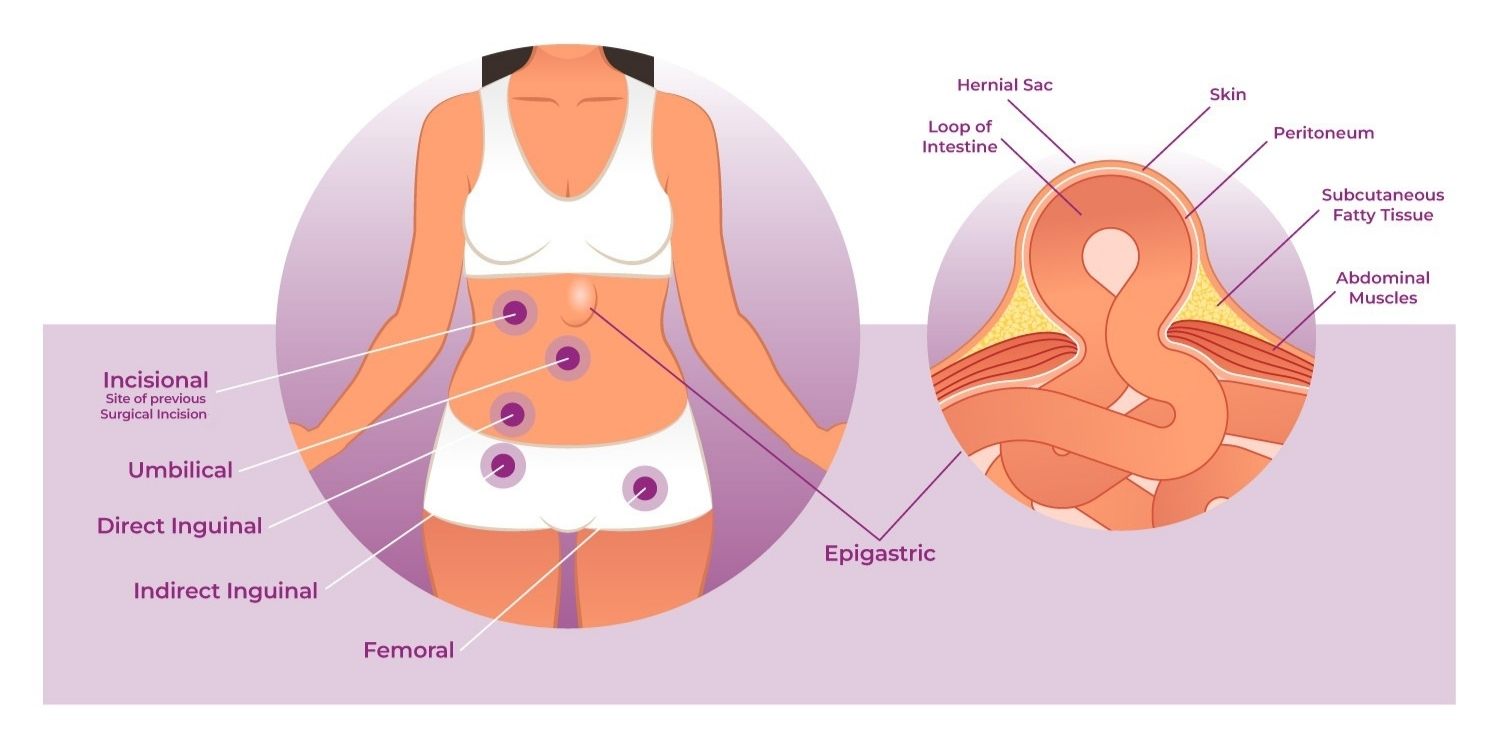 Click image to enlarge
Who Can Get a Hernia?
Anyone can develop a hernia, but certain factors can increase the risk. Hernias occur in both men and women and can appear at any age. They are most common in men, with around one in four experiencing a groin hernia during their lifetime. Risk increases with family history, age and conditions that raise abdominal pressure, such as chronic coughs, constipation, obesity or heavy lifting. Pregnancy can also contribute to hernia development in women.
What Are the Most Common Hernia Symptoms?
Hernia symptoms can vary depending on the type and severity, but most share a few key signs. The most noticeable symptom is a lump or bulge in the affected area, which often becomes more prominent when standing, coughing or straining. Many hernias also cause discomfort or a pulling sensation that worsens after physical activity and improves when lying down.
In some cases, hernias can cause digestive issues, particularly when they affect the abdominal wall. Symptoms may include bloating, nausea or changes in bowel habits due to pressure on the intestines. While these signs are less common than a visible lump or discomfort, they can indicate a larger or more complicated hernia and should be assessed by a doctor promptly.
If you experience sudden severe pain, nausea, vomiting, the inability to pass gas, or a hard or tender bulge, seek urgent medical attention as these may indicate a strangulated hernia, which is a medical emergency.
Can a Hernia Go Away on Its Own?
Most hernias do not heal without treatment because the weakness in the muscle or tissue remains. Over time, hernias can enlarge and cause more discomfort or complications. The only exception is umbilical hernias in infants, which often close naturally as the abdominal muscles strengthen during early childhood. For adults, hernias typically require surgical repair to prevent worsening symptoms or serious issues such as strangulation.
How Are Hernias Diagnosed?

Hernia diagnosis usually begins with a physical examination, where a doctor checks for a lump or bulge and may ask you to cough or strain which will make the hernia more noticeable. This simple test helps identify most hernias, especially in the groin or abdominal wall. However, if the swelling is small or difficult to detect, imaging tests such as an ultrasound, CT scan or MRI may be recommended to confirm the diagnosis and assess its size and location. Accurate diagnosis is essential to determine the best treatment plan and prevent complications.
How Are Hernias Treated?
Most hernias require surgical repair. Even if a hernia is painless, surgery is often recommended because hernias can enlarge over time and lead to complications. Hernia repair is usually performed under general anaesthetic, but in some cases, local anaesthetic may be used for patients who cannot undergo general anaesthesia.
The most common method involves placing a surgical mesh over the weakened area to strengthen the abdominal wall and reduce the risk of the hernia returning in the same spot. At One Stop Healthcare – Hemel, we offer cutting-edge laparoscopic (keyhole) hernia surgery, which uses smaller incisions for faster recovery and minimal scarring. While open surgery is still an option, modern laparoscopic techniques are designed to reduce pain, lower the risk of recurrence and allow most patients to return home the same day as a convenient day case procedure.
How Long Does It Take to Recover After Hernia Repair Surgery?
Recovery time after hernia surgery depends on the type of repair, but most procedures today are performed as day case surgeries, meaning patients go home the same day. In general, you should rest for a few days after the operation and most people can return to light, normal activities within one week. However, it’s important to avoid heavy lifting for at least two to three weeks to allow proper healing. Driving should also be postponed until you are pain-free and able to perform an emergency stop safely. Following your surgeon’s advice will help ensure a smooth recovery and reduce the risk of complications.
Get Expert Help at One Stop Healthcare
If you’re experiencing any hernia symptoms, don’t wait – book an appointment with one of our team of expert consultant general surgeons who can provide:
• Comprehensive assessments
• Diagnostic testing (including endoscopy)
• Tailored treatment plans
• Access to advanced medical and surgical interventions
Alternatively, if you have a question, contact our knowledgeable Enquiries Team who will be happy to help.
Medically reviewed by Mr Gary Atkin - Consultant Colorectal & General Surgeon on 06/02/2026